
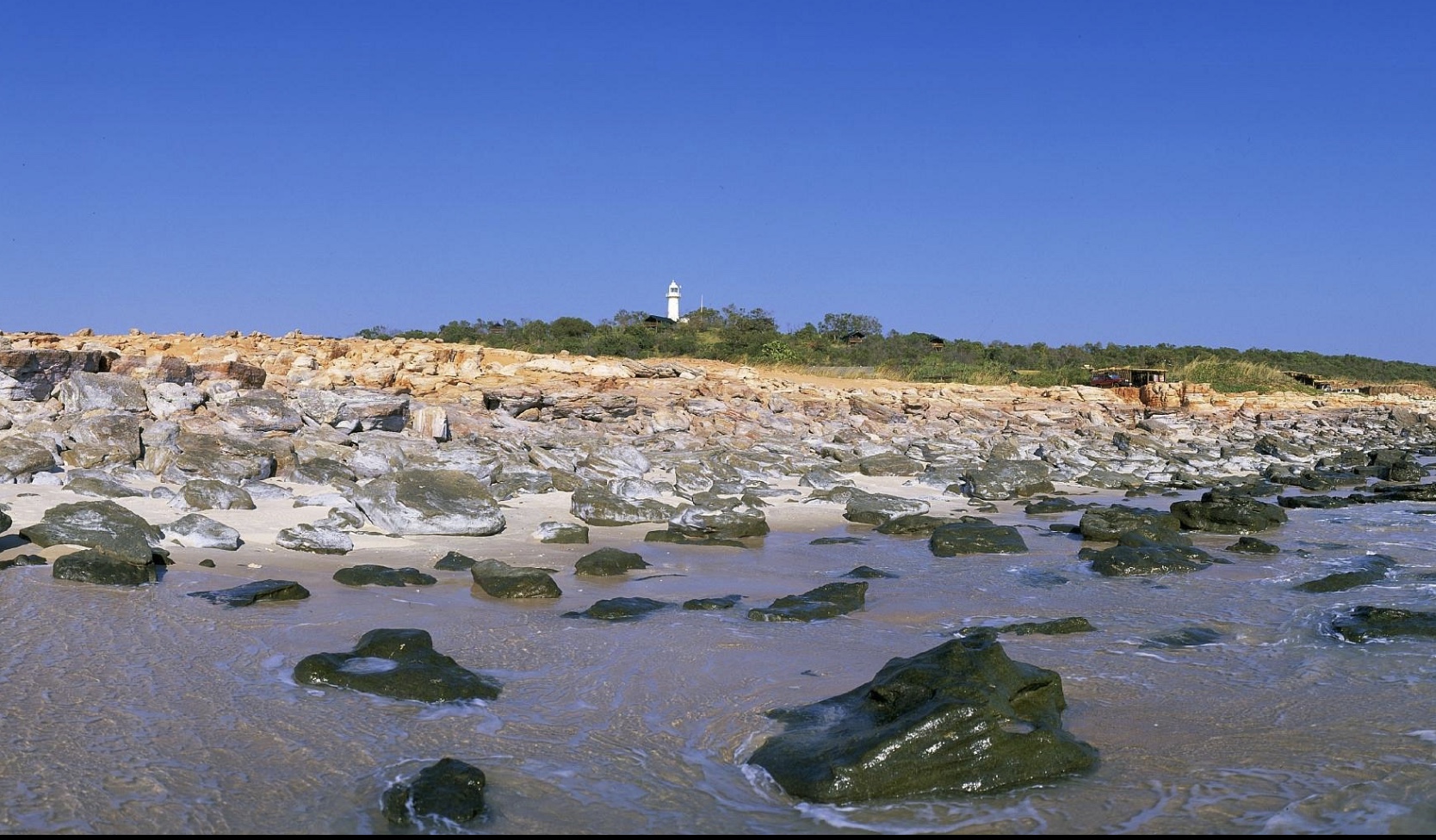

After crossing the Kimberley, it was good to see my first lighthouse in over 2,000kms!
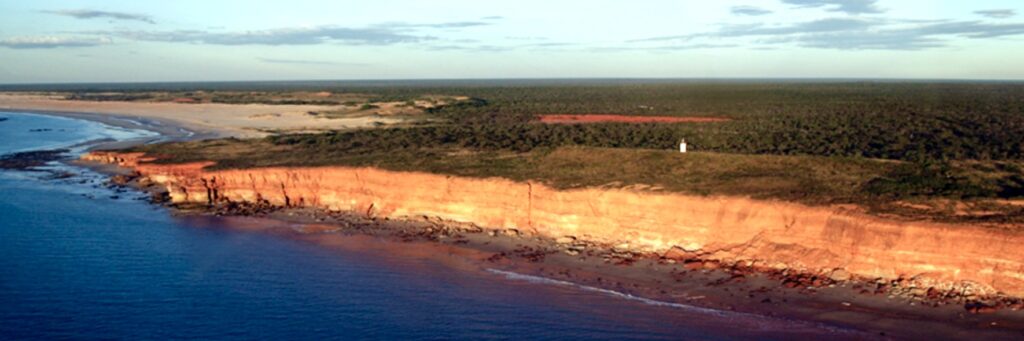
Cape Leveque Lighthouse stands on the remote northern tip of the Dampier Peninsula, 209 kilometres north of Broome, marking the western entrance to King Sound where dramatic red pindan cliffs plunge into the crystalline turquoise waters of the Indian Ocean. This isolated lighthouse has guided vessels through the treacherous approaches to one of Western Australia’s most significant waterways for over a century, serving the vital shipping routes between Fremantle, the northwest ports, and near neighbours including Indonesia, Timor and Singapore.
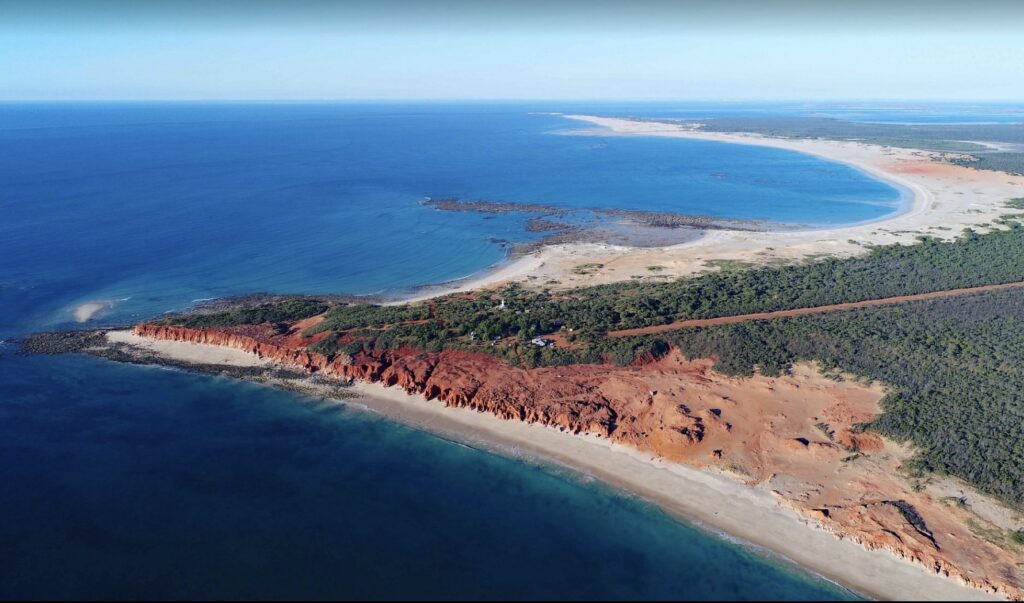
The cape itself was named in 1803 by French explorer Nicolas Baudin after his hydrographer, Pierre Leveque, during the French expedition to map Australia’s northern coastline. Today, this spectacular location sits on the traditional lands of the Bardi Jawi people, who have inhabited this country for many thousands of years and maintain deep cultural connections to this dramatic stretch of coastline where the dreaming tracks of their ancestors converge near Ngamagun, just three miles southwest of the cape.
By the early twentieth century the Western Australian government recognized the critical need to illuminate the entrance to King Sound which served as the gateway to the pearling ports and remote settlements of the northwest coast. Without navigational aids the approach through the maze of islands, reefs, and powerful tides posed extreme dangers to the growing maritime traffic serving the region’s booming industries.
Cape Leveque lighthouse was commissioned on 9 August 1911, becoming one of ten lighthouses built on the Western Australian coast between 1900 and 1913, most concentrated along the northwest coast where maritime activity demanded improved safety measures. At this time, lighthouse construction and maintenance remained the responsibility of the state government though control would later transfer to the Commonwealth Lighthouse Service (CLS) on 1st July, 1915.

The lighthouse tower represents a unique chapter in Australian lighthouse construction, being the only prefabricated cast iron lighthouse designed by the Public Works Department and manufactured locally in Perth. The 8.5-metre tower was fabricated by the firm of Bela Makutz, a Perth company best known for safe making but which also demonstrated considerable expertise in metalwork, having previously fabricated the steelwork for the second Gantheaume Point lighthouse in 1910.
The elegant white cast iron tower was topped with a Chance Brothers lantern housing a third-order dioptric Fresnel lens with the pedestal and precision clockwork mechanism also supplied by the renowned British optical firm. This sophisticated apparatus rotated with mechanical precision producing the lighthouse’s distinctive characteristic of a white flash every 12 seconds (Fl.W. 12s) that would guide mariners for over seven decades.


The challenging logistics of supplying this remote station required the construction of a tramway system for landing supplies at the cape powered by horses as was common for lighthouse supply operations of the era. This infrastructure allowed keepers to maintain operations despite the extreme isolation of their posting.
Two lighthouse keepers and their families were stationed at Cape Leveque living in quarters that provided basic accommodation in this isolated tropical environment. Life at the station demanded resilience and self-sufficiency with families depending on supply ships and their own resourcefulness to survive in conditions far removed from civilization.
The outbreak of World War II brought dramatic changes to the station. As Japanese forces advanced through Southeast Asia and posed a direct threat to Australia’s northern approaches the keepers’ families were evacuated for their safety. The light itself was extinguished to deny enemy vessels navigational assistance while the keepers remained at their posts maintaining the facility and likely contributing to coastal observation duties during this period of national emergency.
Following the war, operations returned to normal and in 1964 the original quarters were replaced with two new two-storey houses that provided improved accommodation for the keepers and their families reflecting modern standards of comfort even in this remote location.
The march of technology finally reached Cape Leveque in 1985 when the lighthouse was converted to automatic operation with solar power and a rotating lamp array eliminating the need for resident keepers. A Racon beacon was also installed adding radar identification capabilities to assist modern navigation. The automation represented Australia’s growing embrace of renewable energy technology in its remote lighthouse network.
In 1986, following the automation and demanning of the lighthouse the land was purchased by the Aboriginal Development Commission for the benefit of Aboriginal people returning control of this significant cultural landscape to its traditional custodians. Today, the area forms part of the Bardi Jawi community’s landholdings, with the Kooljaman wilderness camp offering visitors the opportunity to experience this remote paradise under the stewardship of the traditional owners.
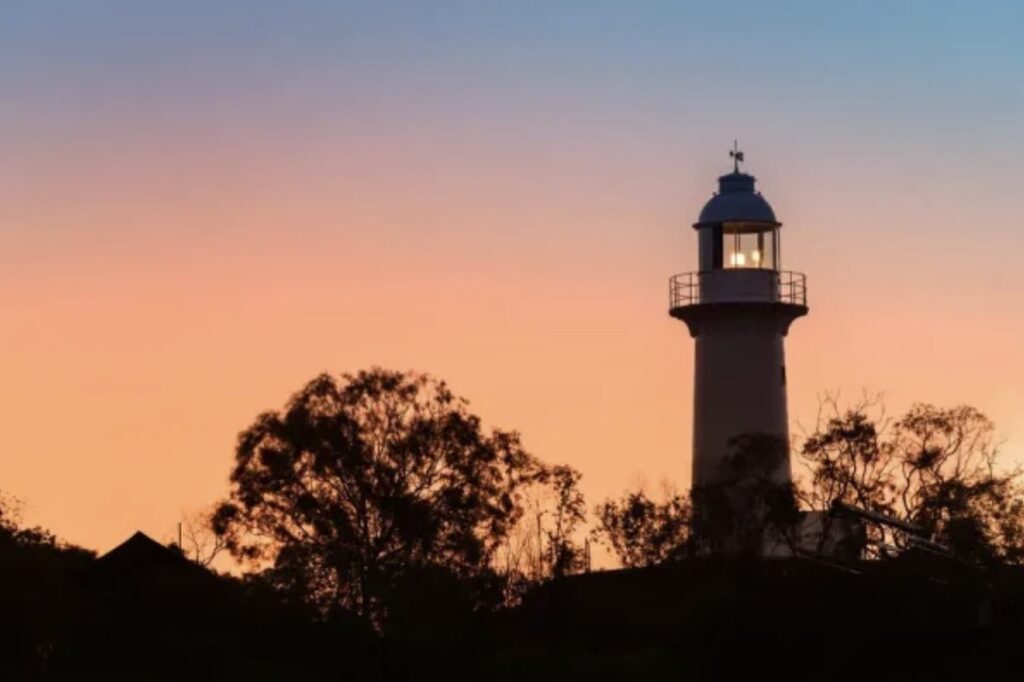

The lighthouse’s heritage significance was formally recognized in 2000 when it received protection under the State Register of Heritage Places acknowledging its historical, technical, and cultural importance to Western Australia’s maritime heritage.
The original Chance Brothers lens, pedestal, and clockwork mechanism were removed during automation and now reside at the Western Australian Maritime Museum in Fremantle, where they are displayed with the lens rotating and light projected onto the gallery walls, allowing visitors to experience the optical brilliance that once swept across King Sound’s dark waters.
Today, Cape Leveque Lighthouse continues its vital navigational role under the Australian Maritime Safety Authority, its white cast iron tower rising 13 metres above the red pindan cliffs, the solar-powered light flashing every twelve seconds across waters where humpback whales migrate, sea turtles’ nest and the Bardi Jawi people continue their connection to country that stretches back countless generations.
Technical Specifications:
First Exhibited: 13 June 1911
Status: Active (Automated 1985)
Location: Cape Leveque, northern tip of Dampier Peninsula, Western Australia (209 km north of Broome)
Named After: Pierre Leveque, hydrographer to French explorer Nicolas Baudin (1803)
Traditional Owners: Bardi Jawi people
Construction: 1911
Construction Material: Prefabricated white cast iron tower
Manufacturer: Bela Makutz, Perth, Western Australia
Tower Height: 13 metres (8.7 metres to base of lantern)
Elevation: 43 metres above sea level
Supply Infrastructure: Tramway system for landing supplies (horse-powered)
Keeper Accommodation:
- Original quarters for two keepers and families (1911-1964)
- Two new two-storey houses (1964-1985)
Original Light Source: Kerosene incandescent mantle
Original Lens: Chance Brothers third-order dioptric Fresnel lens with pedestal and clockwork mechanism
Original Lantern: Chance Brothers manufacture
1985 Conversion: Solar power with rotating lamp array
Current Light Source: 12V, 100W C8 Halogen lamp
Current Optic: VRB-25
Current Light: 242,068 candela intensity, visible 21 nautical miles (nominal range)
Light Characteristic: White flash every 12 seconds (Fl.W. 12s)
Power Source: Solar (converted 18 November 1985)
Additional Equipment: Racon beacon (installed 1985)
Current Operator: Australian Maritime Safety Authority (AMSA)
Land Management: Bardi Jawi community (purchased 1986 by Aboriginal Development Commission)
Heritage Status: State Register of Heritage Places (2000)
Wartime Service:
- World War II: Light extinguished, keepers’ families evacuated, keepers remained at station
Notable Features:
- Only prefabricated cast iron lighthouse designed by WA Public Works Department and manufactured locally
- One of ten lighthouses built on WA coast between 1900 and 1913
- Marks western entrance to King Sound
- Original lens, pedestal, and clockwork on display at Western Australian Maritime Museum, Fremantle
- Located on traditional Bardi Jawi lands near significant dreaming site (Ngamagun)
- Situated among dramatic red pindan cliffs and pristine beaches
- Site now part of Kooljaman wilderness camp managed by Bardi Jawi community
- Tramway supply system remains visible
- Access via 4WD during dry season
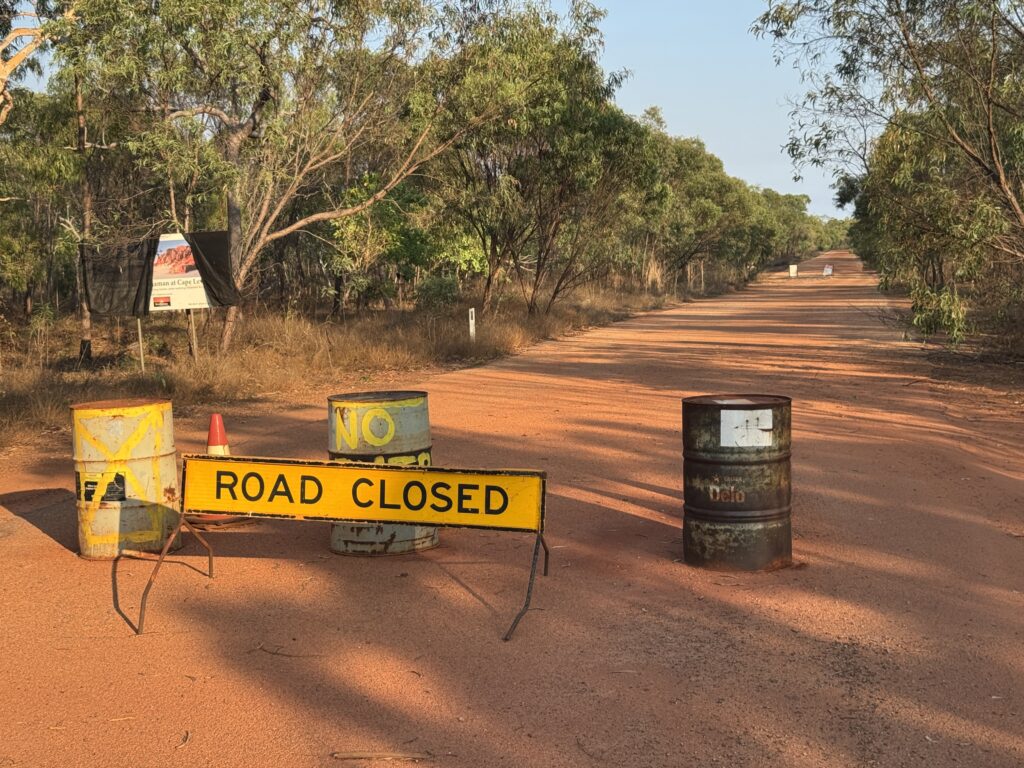
Access: to the lighthouse is currently restricted to the local indigenous communities.
Coordinates: 16° 23.7880′ S, 122° 55.7040′ E
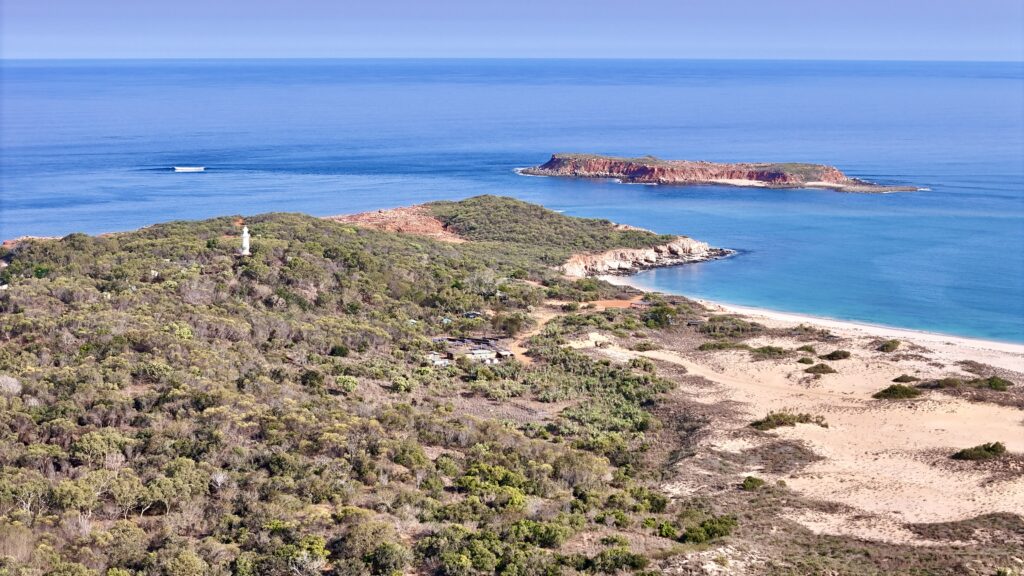
Footnote: A small unmanned light located on Caffarelli Island marking the eastern approach to King Sound was installed in 1967 and still operates in conjunction with Cape Leveque to assist safe passage through the maze of islands are a feature of this stretch of coast. It’s also important to note that despite information to the contrary access to the lighthouse has been restricted to the two local indigenous communities since the pandemic and the closest I could get was to stay at the Cygnet Bay pearl farm (which is recommended), and use my drone to “view” the lighthouse (see photos below).

Leave a Reply


