


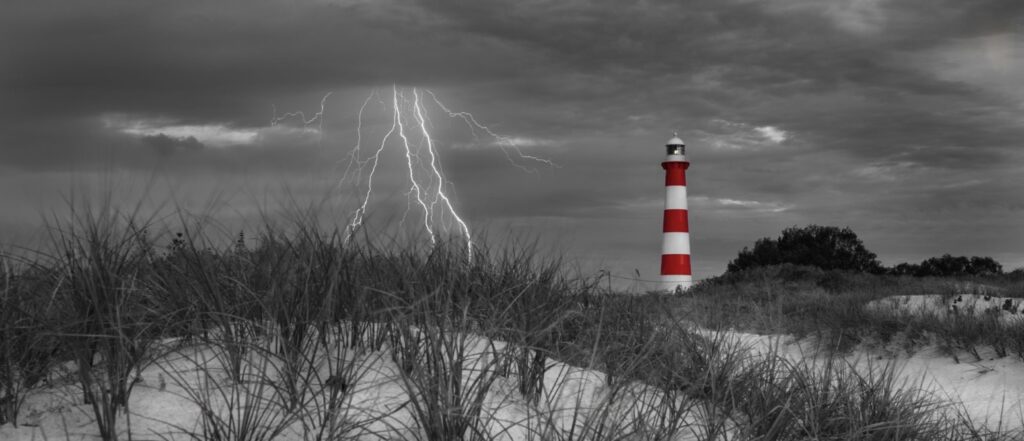
Overseeing the dangerous reefs offshore from Geraldton Point Moore Lighthouse is Australia’s first all-steel tower built on the mainland, a distinctive red and white striped “barbers pole” that has guided ships into Champion Bay for nearly 150 years. At 34 m it was the fourth-tallest lighthouse in Australia and the tallest metal lighthouse in the country upon completion, representing a significant technological achievement in colonial maritime infrastructure.

Point Moore itself gained its name from the prominent headland extending into the Indian Ocean at the northern approaches to Geraldton. This location sits on the traditional country of the Naaguja (Nhanhagardi) people who have occupied the Champion Bay region for thousands of years. Today, the lighthouse and its distinctive candy-stripe appearance has become an iconic symbol of Geraldton, reproduced in street sculptures, letterboxes, water fountains and logos, regularly inspiring local artists and photographers.
By the mid-1870s, the Colonial Government of Western Australia recognised the critical need to improve navigation into Champion Bay. The settlement of Geraldton, established in 1850, was emerging as an important port serving the expanding pastoral stations of the Gascoyne region and the mining operations of the Murchison goldfields. Wool exports, coastal trading vessels and immigrant ships all navigated the treacherous approaches to Champion Bay, where numerous offshore reefs posed constant danger to mariners. The waters off Geraldton and the nearby Houtman Abrolhos Islands were already notorious as a ship trap, having claimed vessels since the earliest days of European navigation through these waters.
The region’s most infamous maritime disaster occurred on 4 June 1629 when the Dutch East India Company flagship Batavia struck Morning Reef in the Houtman Abrolhos, approximately 60 kilometres west of present-day Geraldton. The vessel, on its maiden voyage to the East Indies carrying 341 passengers and crew along with vast wealth in silver and jewels, wrecked among the northernmost Wallabi Group islands. About 40 people drowned immediately, while over 250 survivors reached nearby islands. Commander Francisco Pelsaert departed in the longboat with officers to seek help from Batavia, leaving the survivors stranded without water or adequate food.
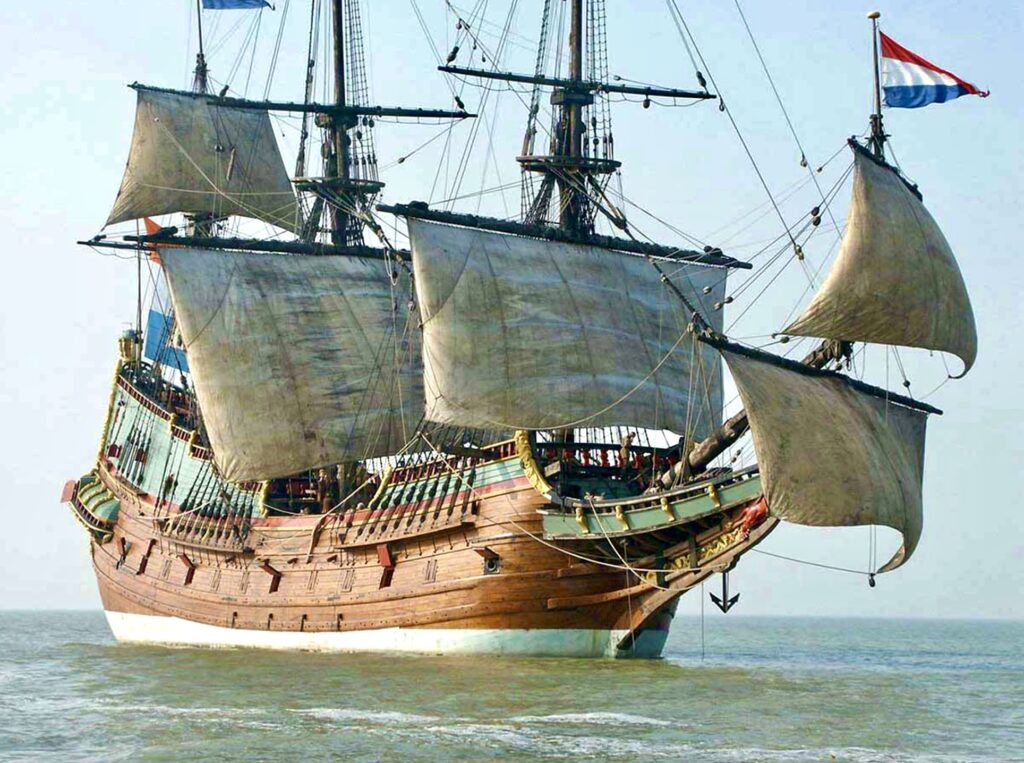
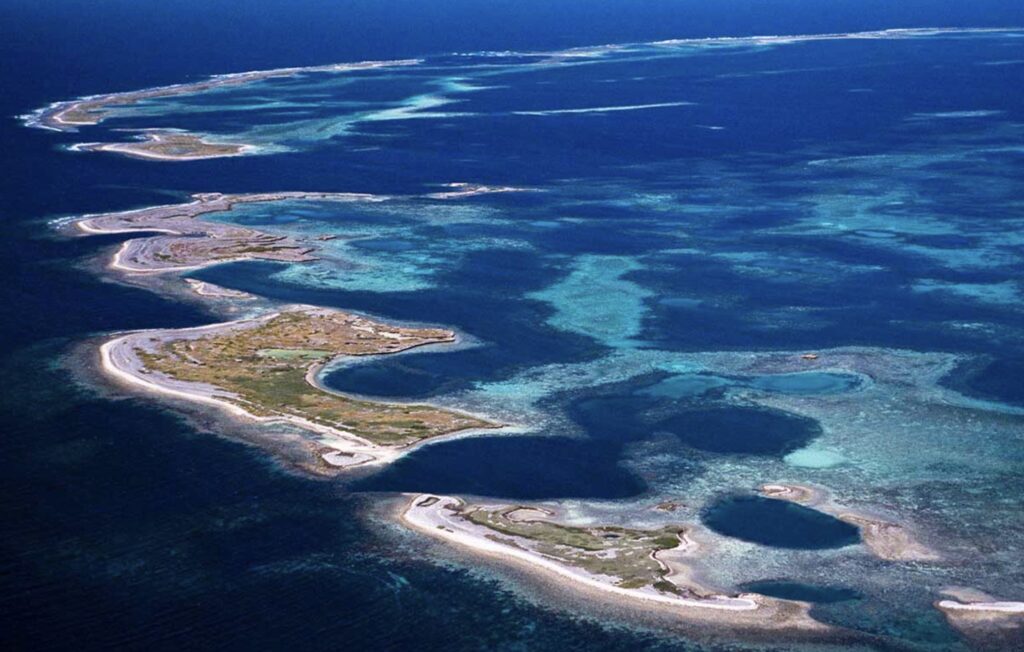
What followed became one of the most horrific episodes in Australian maritime history. During Pelsaert’s absence, under-officer Jeronimus Cornelisz seized control and orchestrated a massacre of over 125 men, women and children as part of a planned mutiny. A group of soldiers under Wiebbe Hayes, who had been sent to West Wallabi Island and discovered water there, successfully resisted two attacks by the mutineers. When Pelsaert returned with the rescue ship Sardam in September 1629, Hayes informed him of the murders. Cornelisz and six accomplices were tried and hanged on what became known as Seals Island in October 1629, while two younger mutineers were marooned on the Australian mainland, becoming the first known European residents of Australia. Of the 322 people aboard Batavia when it struck the reef only 116 survived to reach the port of Batavia. The stone huts built by Hayes’ men on West Wallabi Island are believed to be the oldest European structures on the Australian continent, and the Batavia shipwreck site and survivor camps were inscribed on the National Heritage List in 2006.
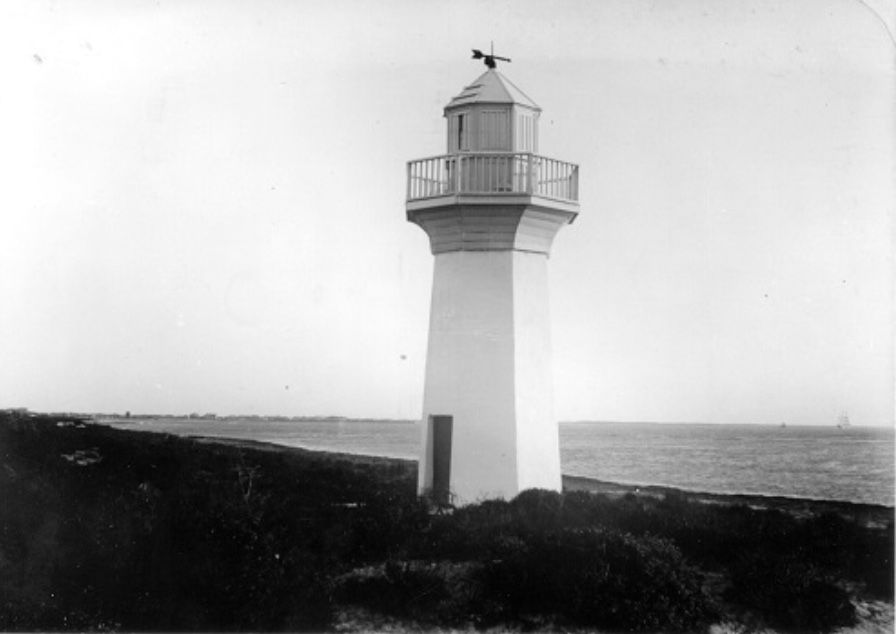
An earlier attempt to establish Geraldton’s primary lighthouse on nearby Flagstaff Hill had commenced with the construction of an octagonal stone tower. In 1874, the decision was made to relocate to Point Moore, and the Flagstaff Hill structure was demolished. Construction preparations began in 1877 when foundations were originally laid but were found to be in the wrong place. Following this discovery, work recommenced at the current site, approximately 5 kilometres from the centre of Geraldton.

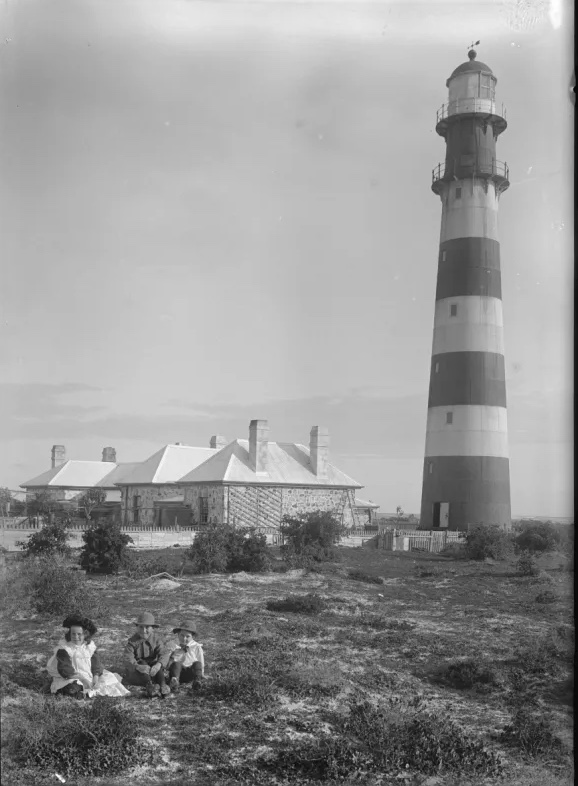
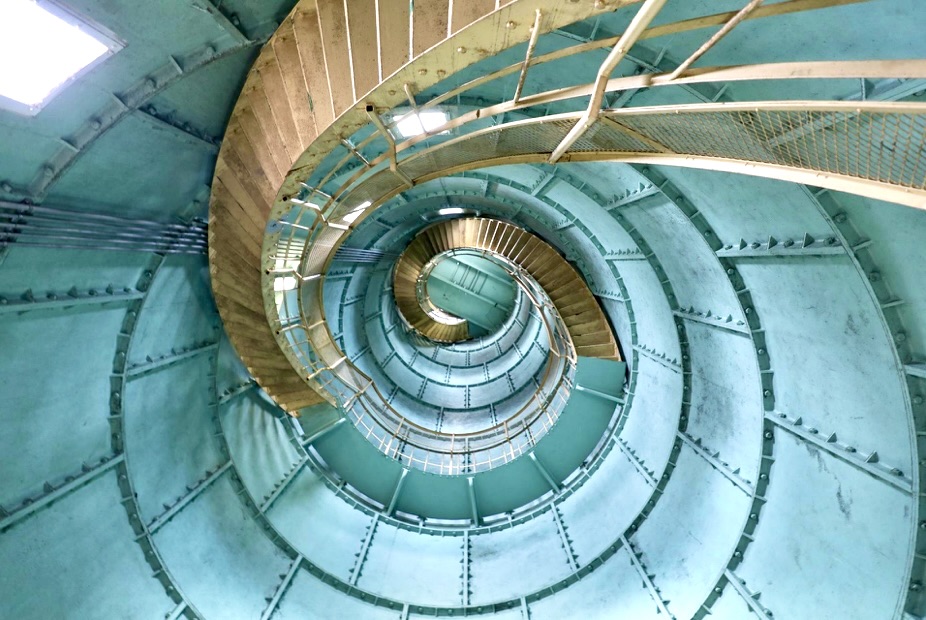
A prefabricated cast-iron lighthouse was manufactured by Chance Brothers of Birmingham and shipped to Geraldton aboard the vessel ‘Lady Louisa’ at a total cost of £4,721. The tapered cast iron tower comprises 16 tiers, each containing 12 plates, which were bolted together on the new foundations. This innovative prefabrication method represented a significant advance in lighthouse construction, allowing the complex tower to be manufactured to precise specifications in England’s industrial workshops and then assembled relatively quickly at the remote Australian site.
The lighthouse was successfully commissioned on 19 March 1878, its powerful beam sweeping across the waters of Champion Bay for the first time. Originally painted grey, it did not receive its distinctive red and white colours until 1879. The light from the original kerosene lamp was greatly amplified by a revolving second-order Fresnel lens, a precision French optical apparatus manufactured in 1876 that concentrated the light source into a powerful beam visible for many miles at sea. In the chamber below the main light was a fixed dioptric subsidiary light which emitted two red beams, providing additional navigational information to mariners approaching the harbour and helping vessels distinguish Point Moore from other lights along the coast.
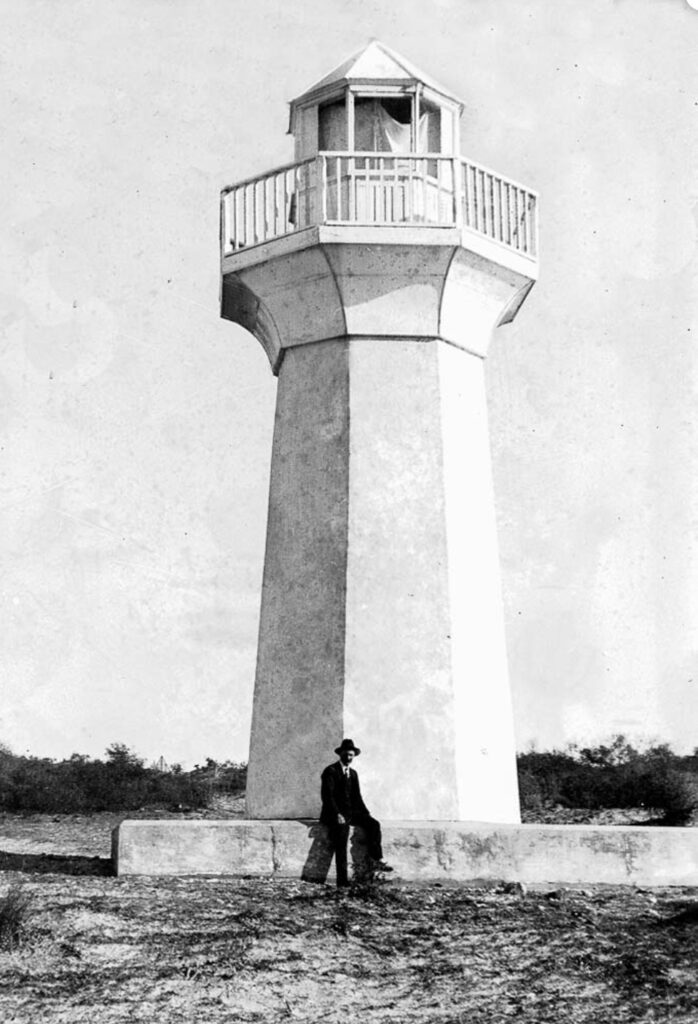
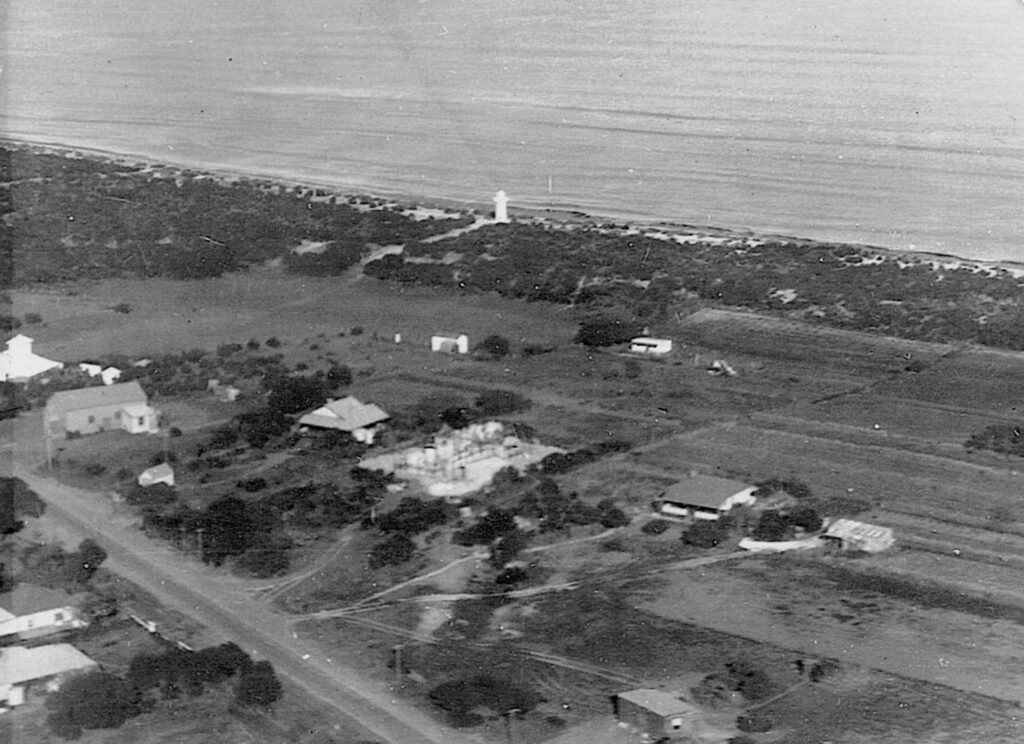
Two years before Point Moore’s completion, the Bluff Point Leading Lights were established in 1876 to guide vessels through the final approach to Geraldton’s jetty. These complementary lights, built of limestone and separated by 260 metres, used a simple but effective principle: when a mariner aligned the two lights vertically, with the upper light appearing directly above the lower, their vessel was on the safe channel through the reef system. The upper square tower was attached to the lightkeeper’s quarters, while the lower octagonal tower stood on the beach. The lower tower was destroyed by fire in 1952 and subsequently demolished, but the upper tower and keeper’s cottage have been preserved, serving as headquarters for the Geraldton Historical Society since 1972 and housing an extensive collection of historical photographs and artefacts including the original Fresnel lens from the upper light.
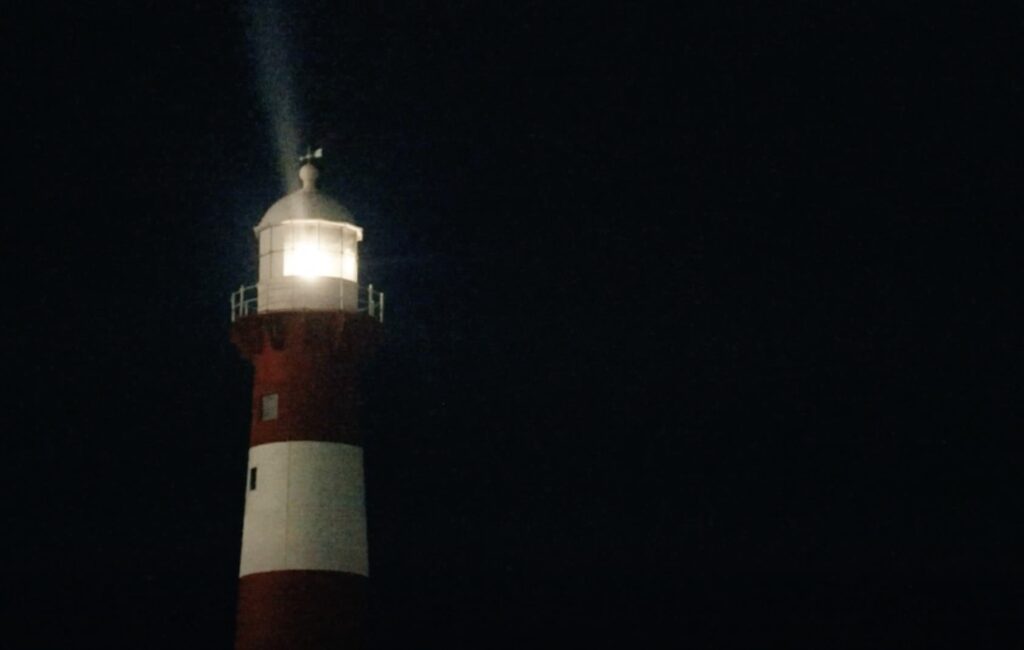
Life at Point Moore, while not as isolated as remote island stations, still demanded exceptional dedication from the keepers and their families. The exposed headland was subject to severe weather including powerful southerly gales and occasional cyclonic systems. Lighthouse keepers maintained the precision clockwork mechanisms that rotated the lens, ensured the oil lamps remained lit throughout the night, cleaned the optical apparatus, and kept meticulous records of weather conditions and passing vessels.
The march of technology reached Point Moore progressively through the twentieth century. The original kerosene wick lamp was replaced by an incandescent-mantle lamp in 1911, significantly increasing the light’s intensity. A further conversion to electricity was undertaken in 1958, eliminating the need for kerosene storage. The light was significantly upgraded in 1962 when the candelas was raised from 90,000 to 320,000, making Point Moore one of the most powerful navigational lights on the Western Australian coast, with the characteristic altered to the current configuration.
In 2009, the lighthouse underwent another significant upgrade when the Fresnel lens was replaced with modern equipment and the Australian Maritime Safety Authority gifted the historic lens to the Western Australian Museum – Geraldton. The lens, after more than 130 years of service, now serves as one of the museum’s fully-functioning exhibits.
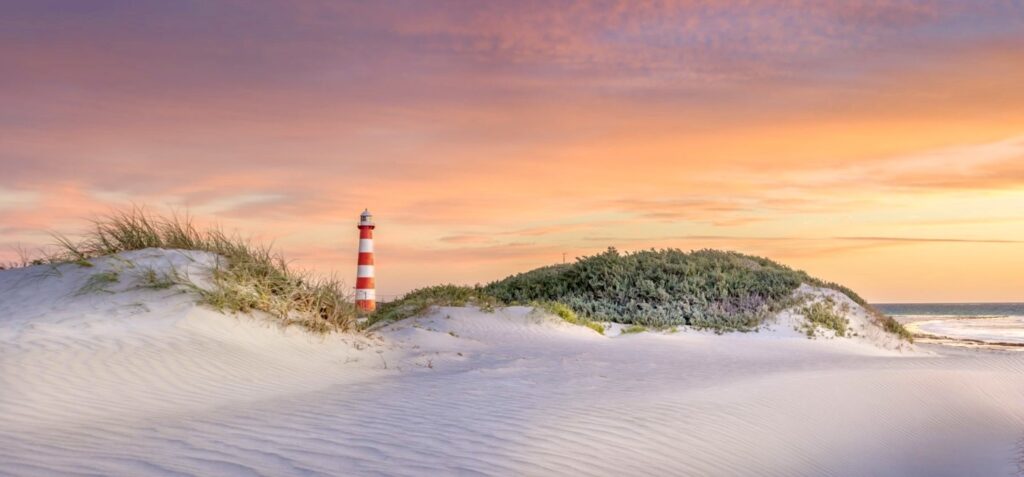
The lighthouse’s heritage significance has been formally recognised through official designation. Point Moore lighthouse remains the oldest surviving Western Australian lighthouse under Commonwealth control, placed on the WA Heritage Council’s Register of Heritage Places in May 2001. This listing acknowledges the tower’s historical, technical, and cultural importance as a pioneering example of prefabricated cast-iron lighthouse construction in Australia and its integral role in the maritime development of the mid-west region.
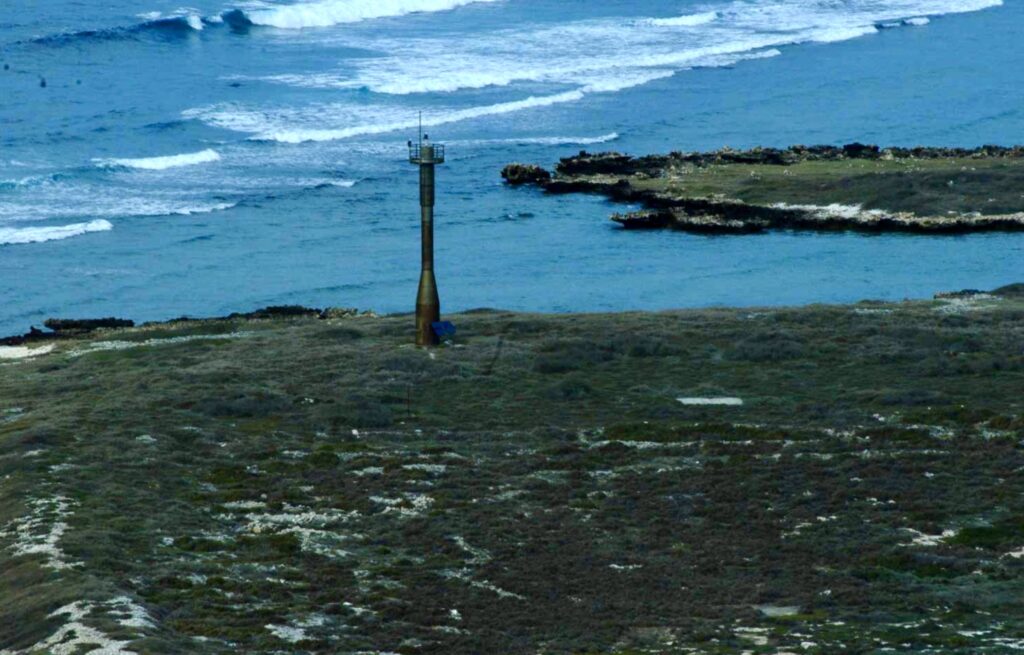
Approximately 60 kilometres west of Point Moore, Pelsaert Island Lighthouse marks the southernmost approaches to the Houtman Abrolhos archipelago. Named after Francisco Pelsaert, commander of the ill-fated Batavia, the Pelsaert Group forms the most southerly true coral reef system in the Indian Ocean. Built as a fully automatic solar-powered lighthouse in the late twentieth century, it represents the evolution of lighthouse technology—designed from the outset to operate without permanent keepers, requiring only periodic maintenance visits. The lighthouse marks waters that witnessed numerous shipwrecks over the centuries, where 19th-century rock phosphate mining operations once employed more than 40 Malay workers between 1884 and 1896, exporting over 48,000 tonnes of material. Today, the Pelsaert Group forms part of the Houtman Abrolhos National Park, declared in July 2019, recognised for containing the largest colonies of wedge-tailed shearwater in the eastern Indian Ocean with over a million breeding pairs recorded.
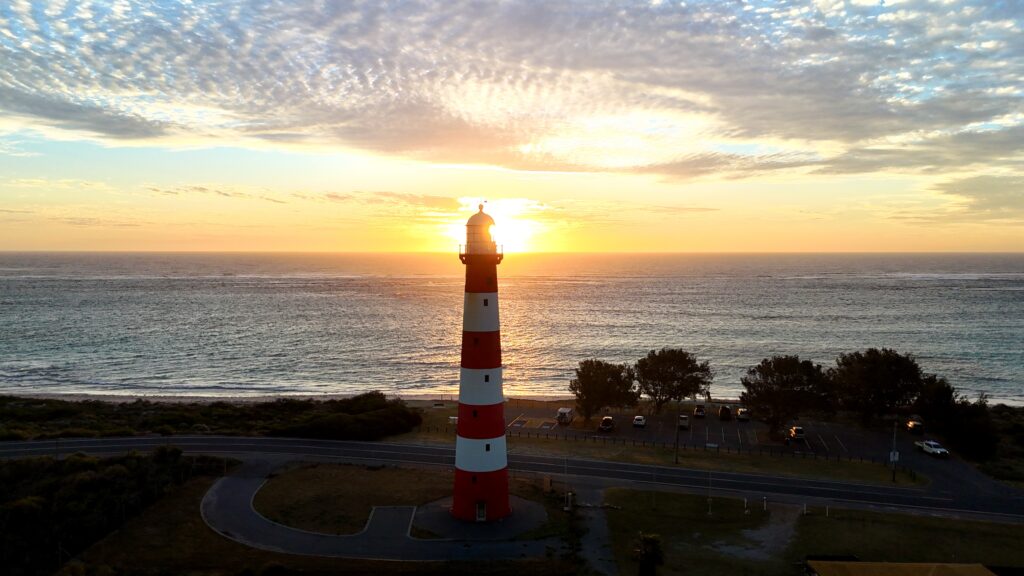
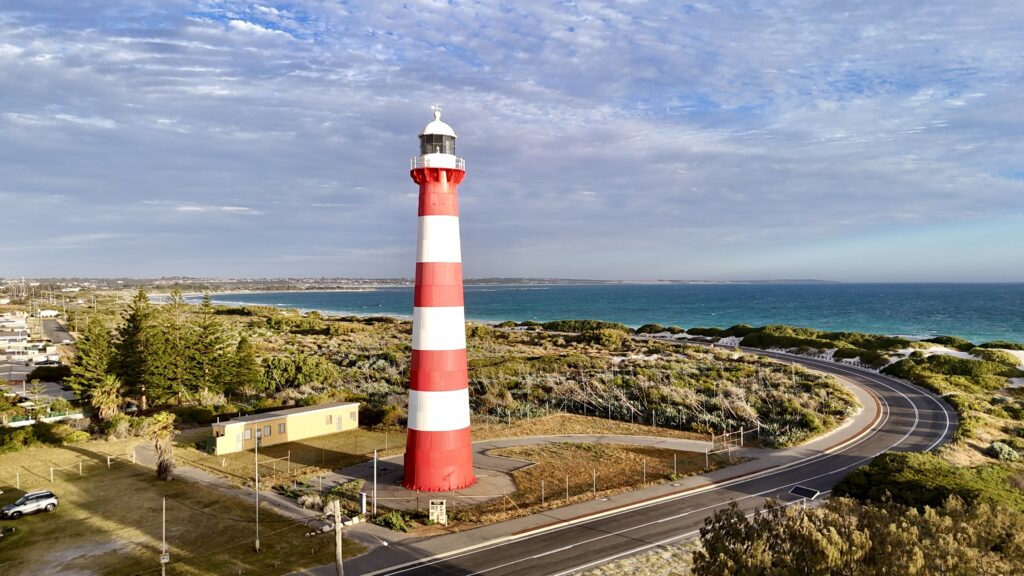
Today, Point Moore Lighthouse continues its vital navigational role under the Australian Maritime Safety Authority. It has been in continuous operation since 1878, its automated beacon flashing its signal across the waters of Champion Bay. The red and white striped tower has transcended its functional purpose to become the most recognisable symbol of Geraldton, appearing in countless photographs, artworks, and promotional materials. The lighthouse draws tourists year-round who come to photograph the striking structure against the backdrop of the Indian Ocean, often pausing to watch ospreys nesting in nearby poles or observe vigorous kite surfing activity on the adjacent Grey’s Beach during summer months. The surrounding area has developed into a popular recreational precinct while maintaining the lighthouse’s maritime heritage, continuing to serve as a focal point for the local community’s connection to Geraldton’s maritime history and identity.
Technical Specifications – Point Moore Lighthouse
First Exhibited: 19 March 1878
Status: Active (Automated)
Location: Point Moore, Geraldton, Western Australia
Construction: 1877-1878
Construction Material: Prefabricated cast-iron plates
Manufacturer: Chance Brothers, Birmingham, England
Original Lens: Second-order Fresnel lens (1876)Tower Height: 34m
Tower Configuration: 16 tiers, each containing 12 bolted plates
Distinctive Painting: Red and white stripes (from 1879)
Current Operator: Australian Maritime Safety Authority (AMSA)
Heritage Listing: WA Heritage Council’s Register of Heritage Places (May 2001)
Status: Oldest surviving Western Australian lighthouse under Commonwealth control
Bluff Point Leading Lights
First Exhibited: 17 October 1876
Status: Upper light preserved; lower light destroyed by fire in 1955
Location: Bluff Point, Geraldton, Western Australia
Operational Period: 1876-1943 (manned)Construction Material: Limestone
Tower Separation: 260 metres
Function: Leading lights indicating reef channel to Geraldton jetty
Pelsaert Island Lighthouse
First Exhibited: 1974
Status: Active (Automated from time of construction)
Location: Pelsaert Island, Houtman Abrolhos, Western Australia
Construction: Stainless steel with solar panels, fully autonomous design
Function: Marks southern extent of Houtman Abrolhos archipelago

p.s. Due to it shape and steel construction it turns out the lighthouse has excellent acoustics and a group of local Geraldton musicians occasionally perform in the lighthouse as reported by the ABC 7.30 Report on 13.3.2023 (see following link):
https://www.abc.net.au/news/2023-03-13/point-moore-lighthouse-proves-to-be-a-unique-sound/102090892

Leave a Reply


