
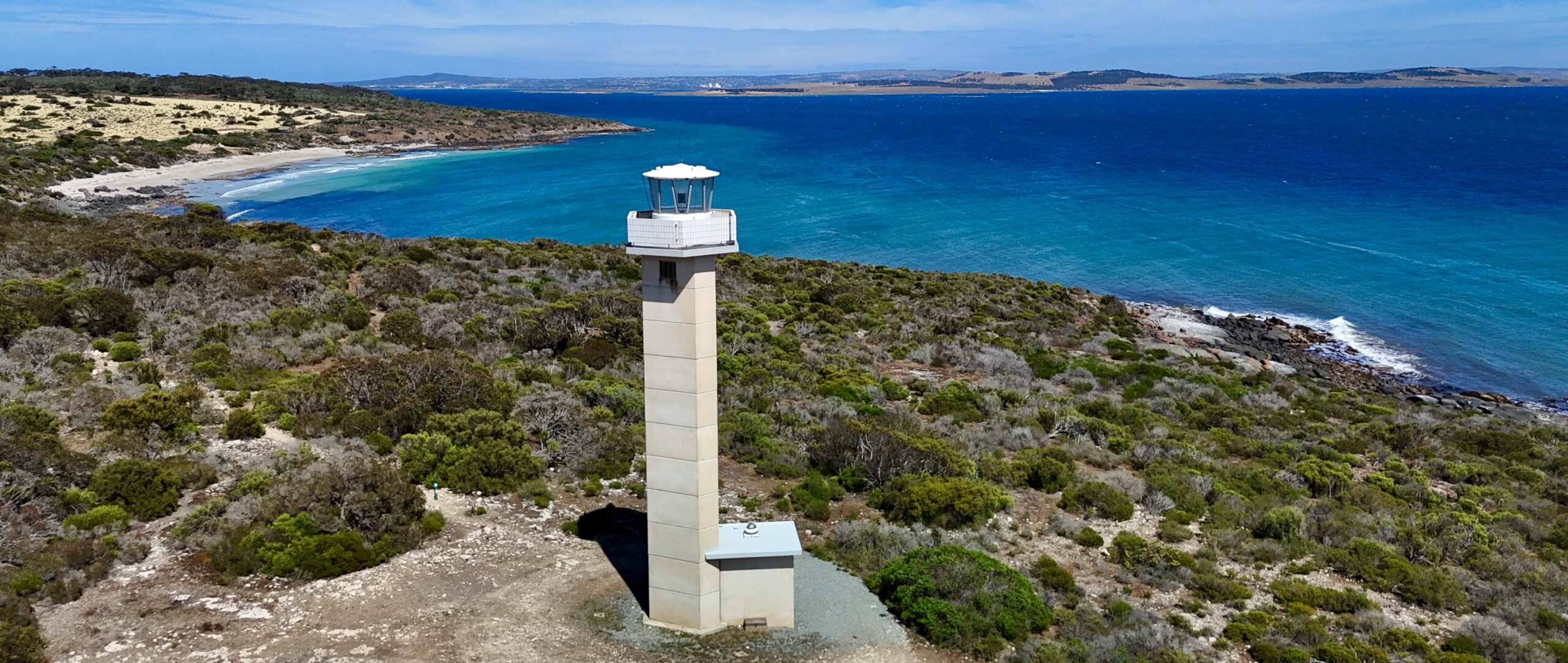

Standing watch over the approaches to the deep natural harbour of Boston Bay and the vast expanse of Spencer Gulf on South Australia’s Eyre Peninsula, two distinctive lighthouses have guided mariners through treacherous waters for over a century. The Cape Donington Lighthouse stands at the northern entrance to Port Lincoln, while the remote South Neptune Island Lighthouse warns of the low-lying, reef-fringed Neptune Islands group at the gulf’s southern approach. Together, they help define a vital trade route for the the regions agricultural, mining and industrial products and protect the local tuna fishing fleets, their lights a testament to early 20th-century efforts to illuminate one of Australia’s more hazardous coastal regions amid growing maritime traffic and a long history of shipwrecks in these waters.
143: Cape Donington Lighthouse:
Perched on the windswept promontory named by Matthew Flinders in 1802 after his Lincolnshire birthplace, Cape Donington Lighthouse rises as a stark hexagonal concrete tower overlooking the southern approaches to Port Lincoln. The cape forms the northern tip of the Jussieu Peninsula within Lincoln National Park, its rugged cliffs and surrounding reefs long posing risks to vessels entering the sheltered waters of Boston Bay.
The need for a light became pressing as Port Lincoln developed as a key port in the late 19th and early 20th centuries. One of South Australia’s earliest purpose-built unattended automatic beacons, along with similar lights at Eastern Shoal (1902) and Cape St Albans (1908). Cape Donington was established under the South Australian Marine Board during the transition of lighthouse responsibilities to the new Commonwealth Lighthouse Service in 1915. A preliminary navigation aid was installed in 1905, soon replaced by the substantial concrete tower, which was constructed that same year and first exhibited shortly thereafter.

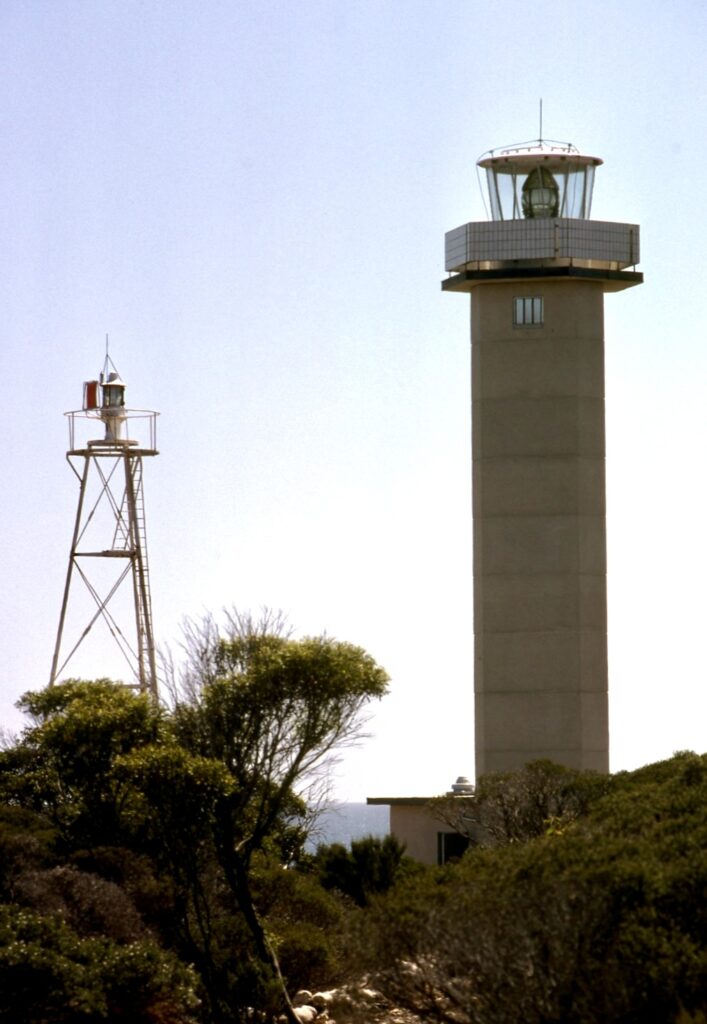
The original 1905 wooden structure was replaced by a 17m hexagonal concrete tower which was also fully automated but strangely I can’t find any information as to when this new tower was commissioned although it looks to be of a similar design and construction to the Cape Jervis lighthouse which was built in 1972. As with the tower it replaced it required no resident keepers and was an innovative cost-saving measure reflecting advances in unmanned technology pioneered in South Australia. The nearby Donington Cottage, built in 1899 by early caretaker William Argent, provided occasional oversight and accommodation for maintenance crews and the restored cottage remains available for visitors today. The light’s occulting characteristic offered a reliable guide through the entrance channels and was visible 270 degrees across the bay helping prevent strandings on the peninsula’s reefs.
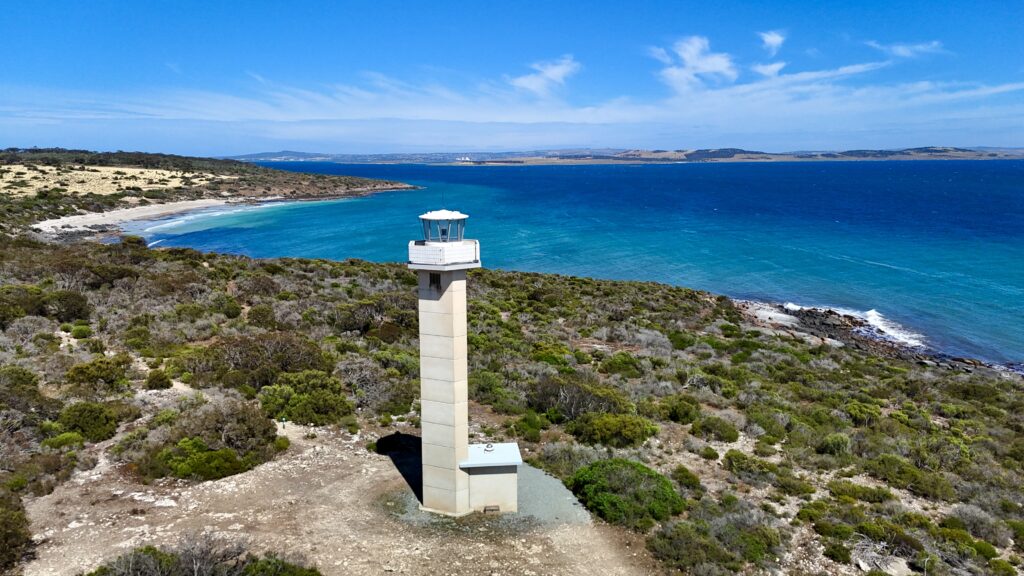
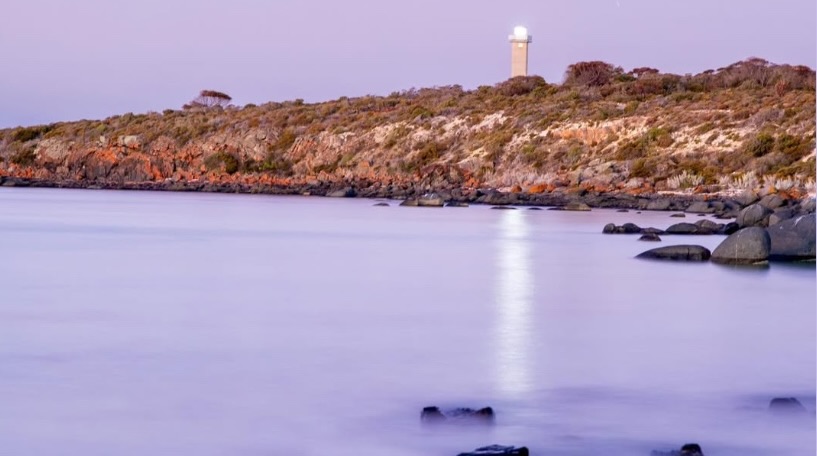


The lighthouse has undergone periodic upgrades, including conversion to electric operation while retaining its original form. Fully automated throughout its history, it stands as a quiet emblem of early Commonwealth-era efficiency in a landscape now cherished for its national park and panoramic coastal views.
144: South Neptune Island Lighthouse:
On the barren granite outcrop of South Neptune Island, the largest in the southern Neptune Islands group and 70 km south of Port Lincoln stands a modest modern tower that belies a dramatic history of relocation, isolation, and response to maritime peril. The low profile of the Neptune Islands had long confounded navigators with their reefs claiming numerous vessels in the 19th century and prompting repeated calls for a light as early as the 1870s.
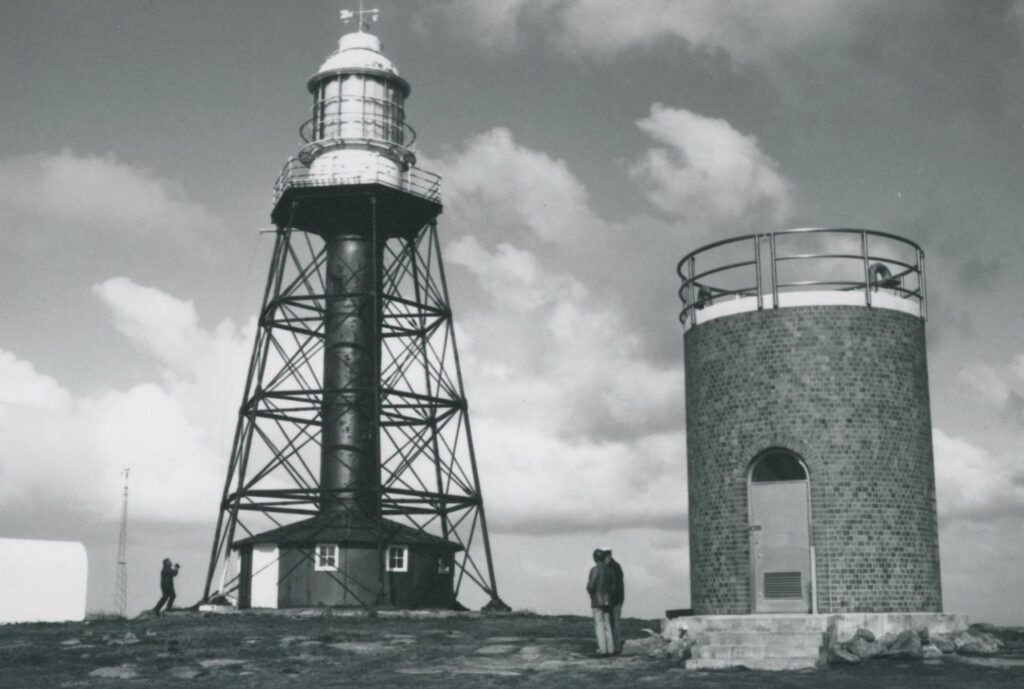
The original lighthouse was none other than the wrought iron tower first erected at the entrance to Port Adelaide’s Port River in 1869 which was prefabricated in England by Moreland and Sons and shipped to Adelaide. Decommissioned in 1901 when a new light was built at Wonga Shoal the tower was dismantled, transported by vessel, and painstakingly re erected on South Neptune Island. Fitted with a new Chance Brothers second order dioptric lens and lantern it was first exhibited on 1 November 1901, its vapourised kerosene illuminant powered by a clockwork mechanism that required winding every 90 minutes.

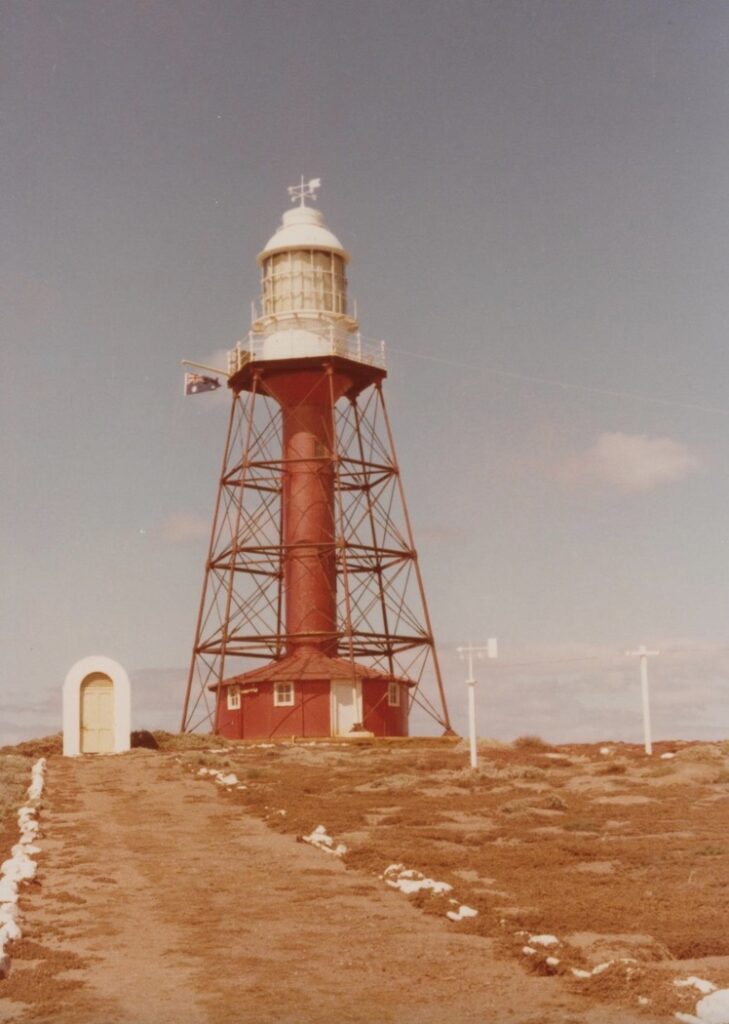
Manned from the start due to its remote location the station included attached keepers’ cottages in a rare row configuration unique in surviving South Australian examples, along with stores, stone fences, rainwater tanks, and outbuildings, underscoring the self-sufficient life on this windswept, shark infested outpost. Supplies arrived monthly from Adelaide, and families endured extreme isolation. The light operated on kerosene until electrification in 1976.
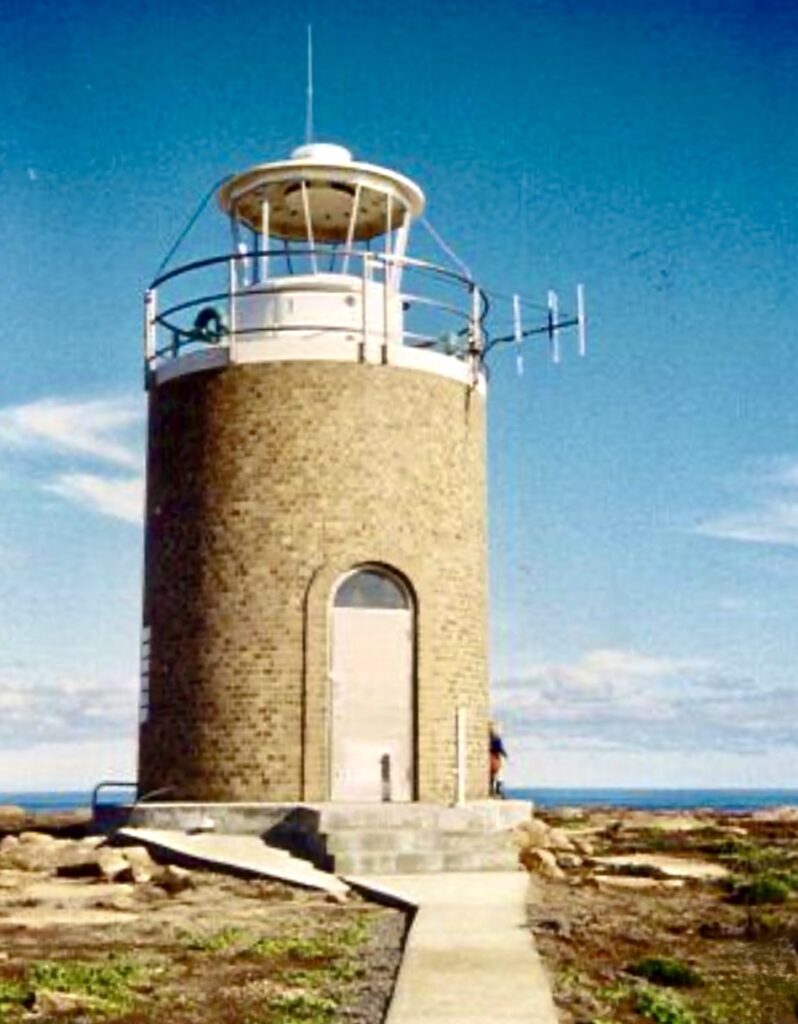
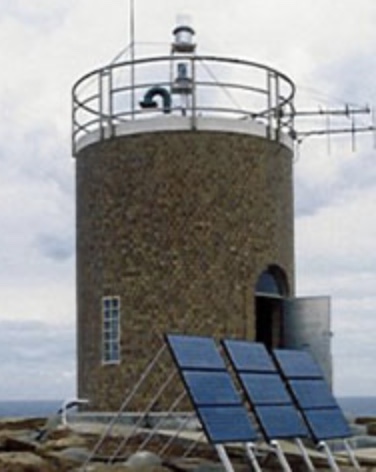
Deterioration of the iron tower led to its replacement in 1985 with a simple round brick structure. The historic tower was returned to Port Adelaide, restored, and reopened in 1986 as a prominent exhibit at the South Australian Maritime Museum, unveiled by Queen Elizabeth II during the state’s sesquicentenary. The station was demanned and converted to automatic solar-powered operation in 1990 ending nearly nine decades of human presence.
Today, both lighthouses remain vital aids under the Australian Maritime Safety Authority. Cape Donington continues as an active coastal beacon within a popular national park, while South Neptune Island serves as a critical warning at the gulf’s entrance, its heritage complex a protected reminder of the keepers who once tended one of Australia’s most isolated posts.
Technical Details:
Cape Donington Lighthouse
- First Exhibited: 1905 (the original tower)
- The Current Tower: 1972?
- Construction: hexagonal reinforced concrete
- Tower Height: 17 metres
- Focal Plane: 23 metres above sea level
- Original Light Source: Acetylene gas (automatic unattended)
- Current Characteristic: Oc.W. 6s (white occulting every 6 seconds)
- Range: Approximately 15–18 nautical miles (nominal)
- Status: Active, automated from establishment
- Site: Within Lincoln National Park; accessible by unsealed road
- Operator: Australian Maritime Safety Authority (AMSA)
South Neptune Island Lighthouse
- First Exhibited: 1 November 1901 (relocated tower); current tower from 1985
- Construction: 1985 (round brick replacement tower); original iron tower relocated and re-erected 1901, decommissioned 1985
- Tower Height: Approximately 12 metres (current brick tower)
- Focal Plane: Approximately 74 metres above sea level (historical iron tower elevation)
- Original Lens: Chance Brothers second-order dioptric (1901–1985)
- Original Light Source: Vapourised kerosene (incandescent mantle)
- Current Characteristic: Fl.W. 10s (white flash every 10 seconds)
- Range: 20–25 nautical miles
- Status: Active, automated 1990 (solar-powered electric)
- Heritage Listings: Original tower and station complex (keepers’ cottages, etc.) on South Australian Heritage Register (1994); relocated iron tower heritage-protected in Port Adelaide
- Operator: Australian Maritime Safety Authority (AMSA)
Leave a Reply


