
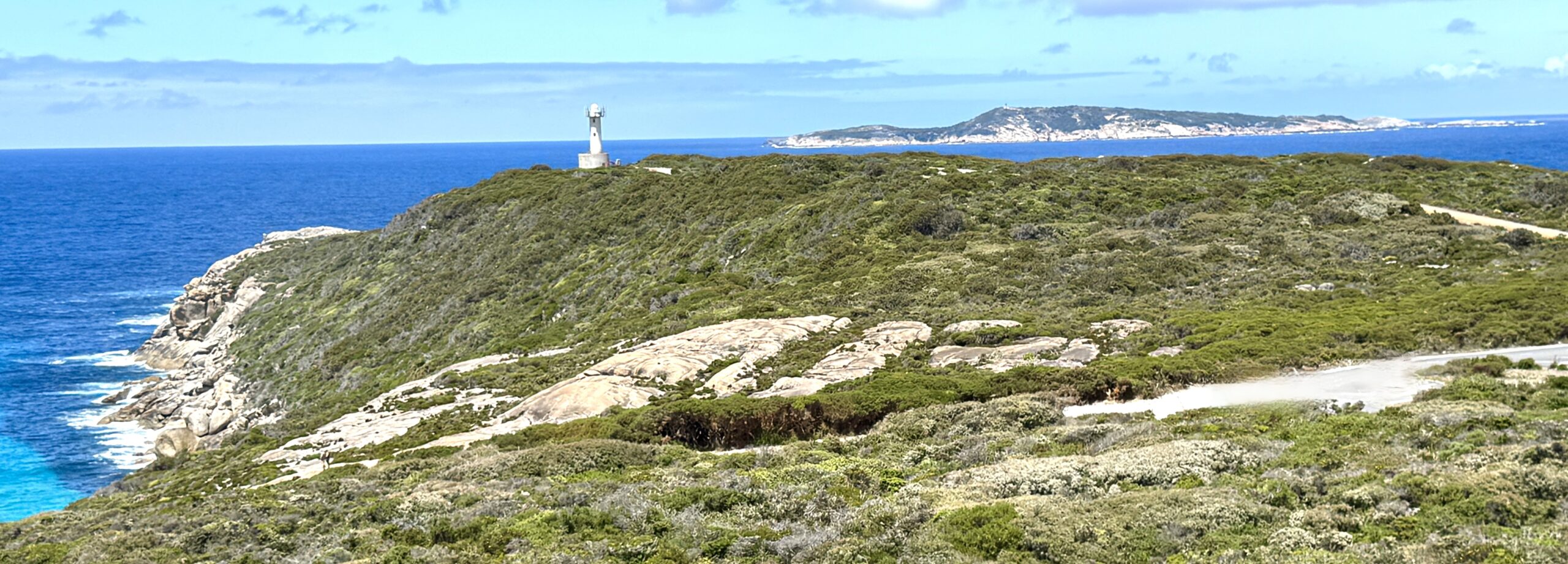

Guarding the approaches to King George Sound, known to the Menang Noongar people as Memang Koort, three lighthouses have marked one of Western Australia’s most critical maritime corridors for over 160 years. These lighthouses reflect Albany’s pivotal role as the colony’s principal port before Fremantle’s development, their construction spanning nearly 120 years from colonial convict labour to modern functional, if not aesthetic, design. The lighthouses witnessed Albany’s evolution from colonial outpost to a port of profound national significance where hundreds of thousands of Australian and New Zealand soldiers departed for both World Wars, their convoys guided safely through the Sound, and for many, sadly, these lights would be their last sight of Australia.
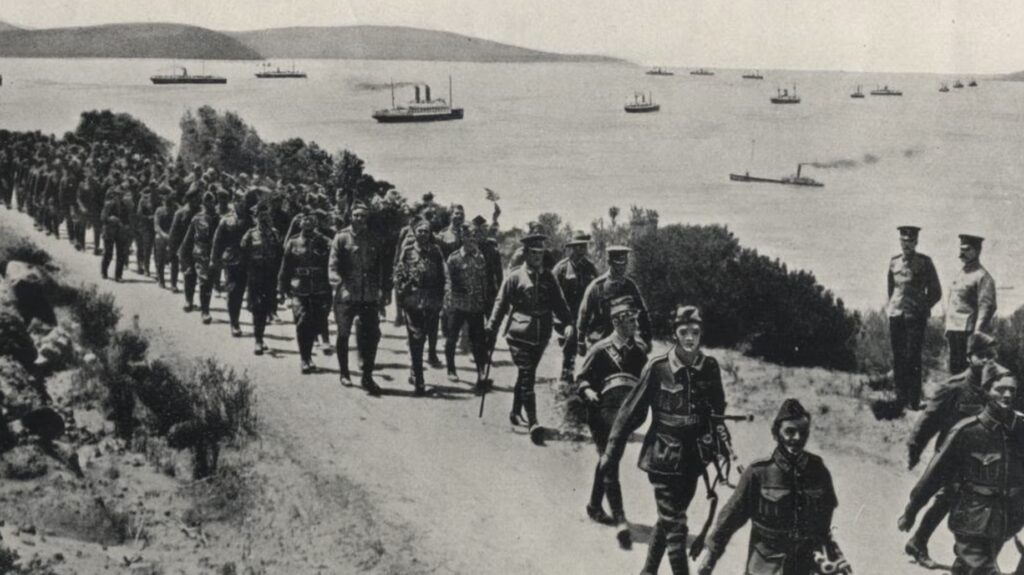
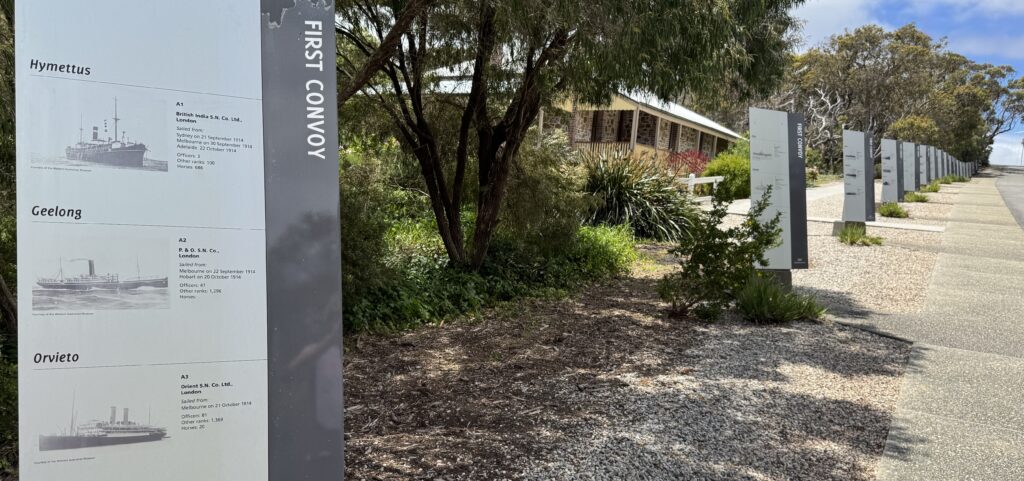
The strategic importance of Albany’s King George Sound was recognised when it became the assembly point for ANZAC convoys departing for overseas service. On 1 November 1914, the First Convoy of 38 transport ships carrying 30,000 Australian and New Zealand troops departed Albany for the Great War, and the flashing light of Breaksea Island would have been the last sight of Australia for soldiers heading to Gallipoli, the Western Front, and other theatres. The lighthouses that had guided merchant vessels for decades now shepherded troopships carrying those that would become the first ANZACS. During World War II, Albany again served as a major embarkation point, with thousands of servicemen and women passing through the port between 1939 and 1945. The lighthouses continued their vigil, their beams providing safe navigation for both departing troopships and returning vessels, bearing witness to one of the most poignant chapters in Australian military history.



140. The Breaksea Island Lighthouse
Breaksea Island, a striking granite landform 12 kilometres offshore, holds the distinction of hosting Western Australia’s second lighthouse. Following the Crimean War’s end in 1856, the anticipated return of profitable mail boat services prompted the British Government to propose two lighthouses for Albany, with construction costs borne imperially provided the colonial government funded operations. Construction commenced in May 1857 under Captain Wray of the Royal Engineers. The prefabricated cast-iron tower, designed by the Colonial Lighthouse Engineer at the Board of Trade in London, arrived in June, and convicts assembled the 13.1-metre octagonal structure at the island’s centre, surrounded by stone keeper’s quarters. Joseph Nelson was appointed first keeper at an annual salary of £100, and the light was first exhibited on 1 January 1858, fitted with a second-order catadioptric lens with oil burners visible for 27 nautical miles from its focal plane 116.7 metres above sea level.
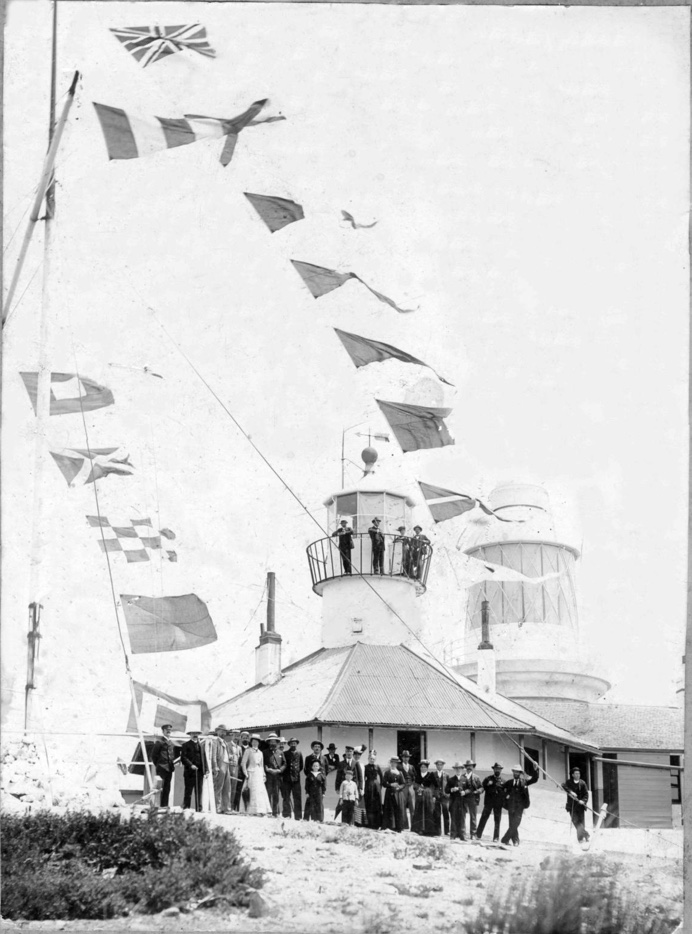
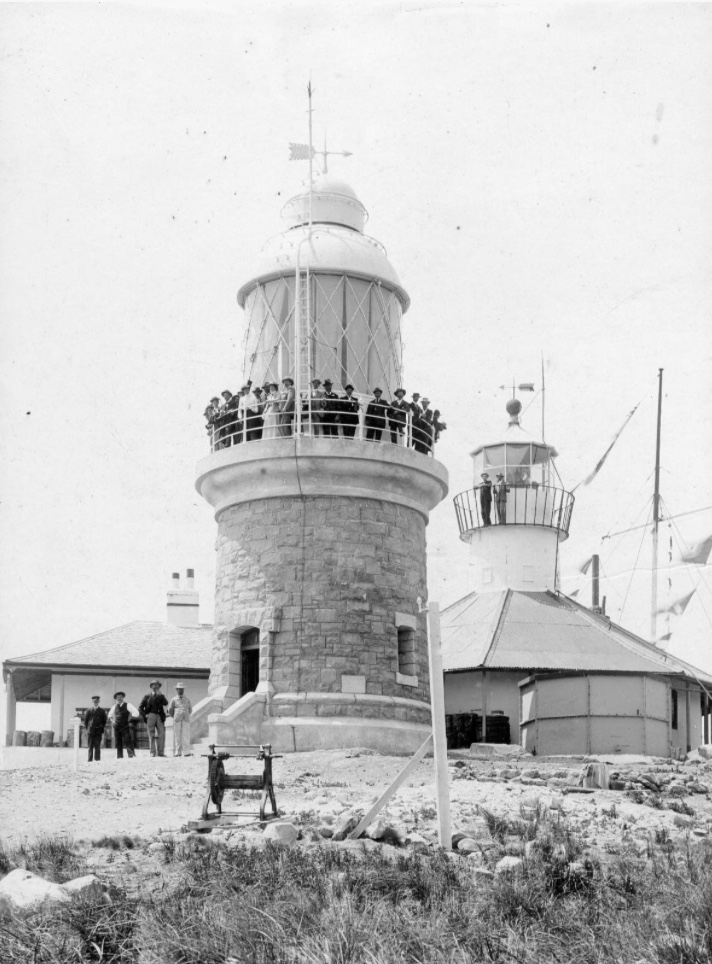
The lighthouse’s isolation exacted a terrible human cost. William Hill, appointed keeper in August 1860, suffered a mental breakdown on 23 March 1864 and is believed to have jumped into the sea. His tragic fate highlighted the psychological toll of lighthouse keeping in such remote conditions. The island was connected to Albany by telephone in 1885, a remarkable technological achievement for its time that provided some relief from the isolation.
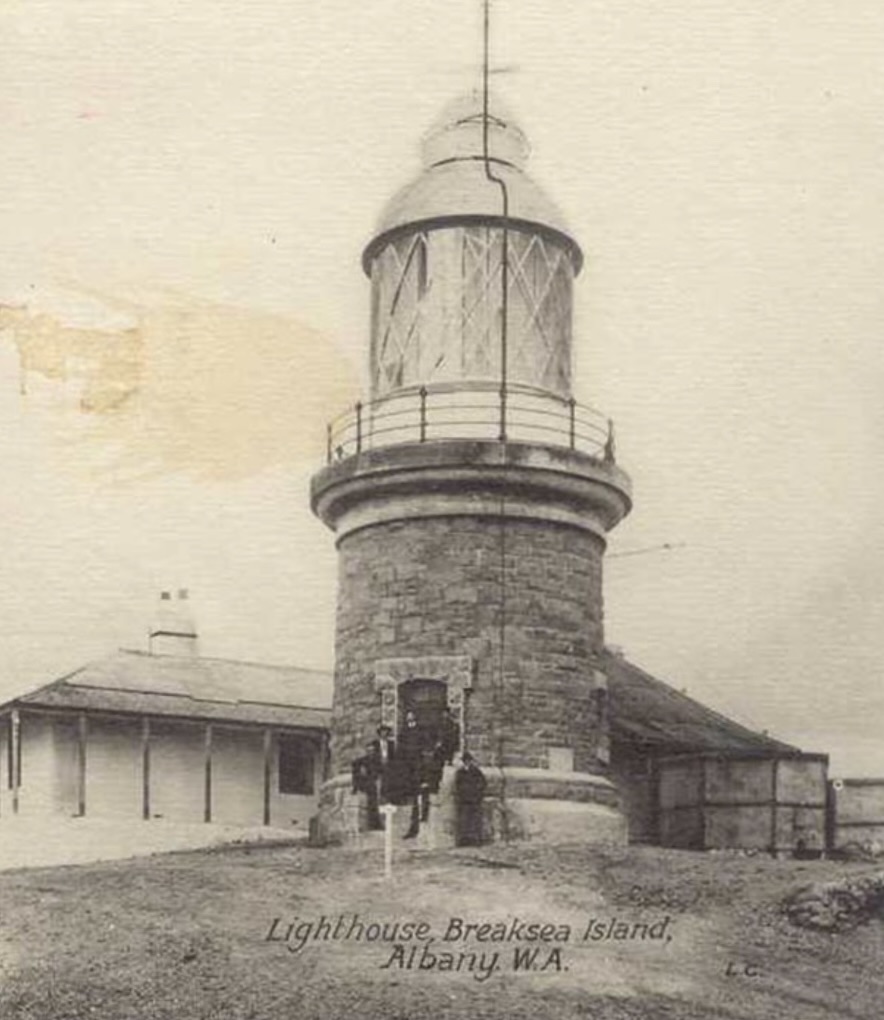
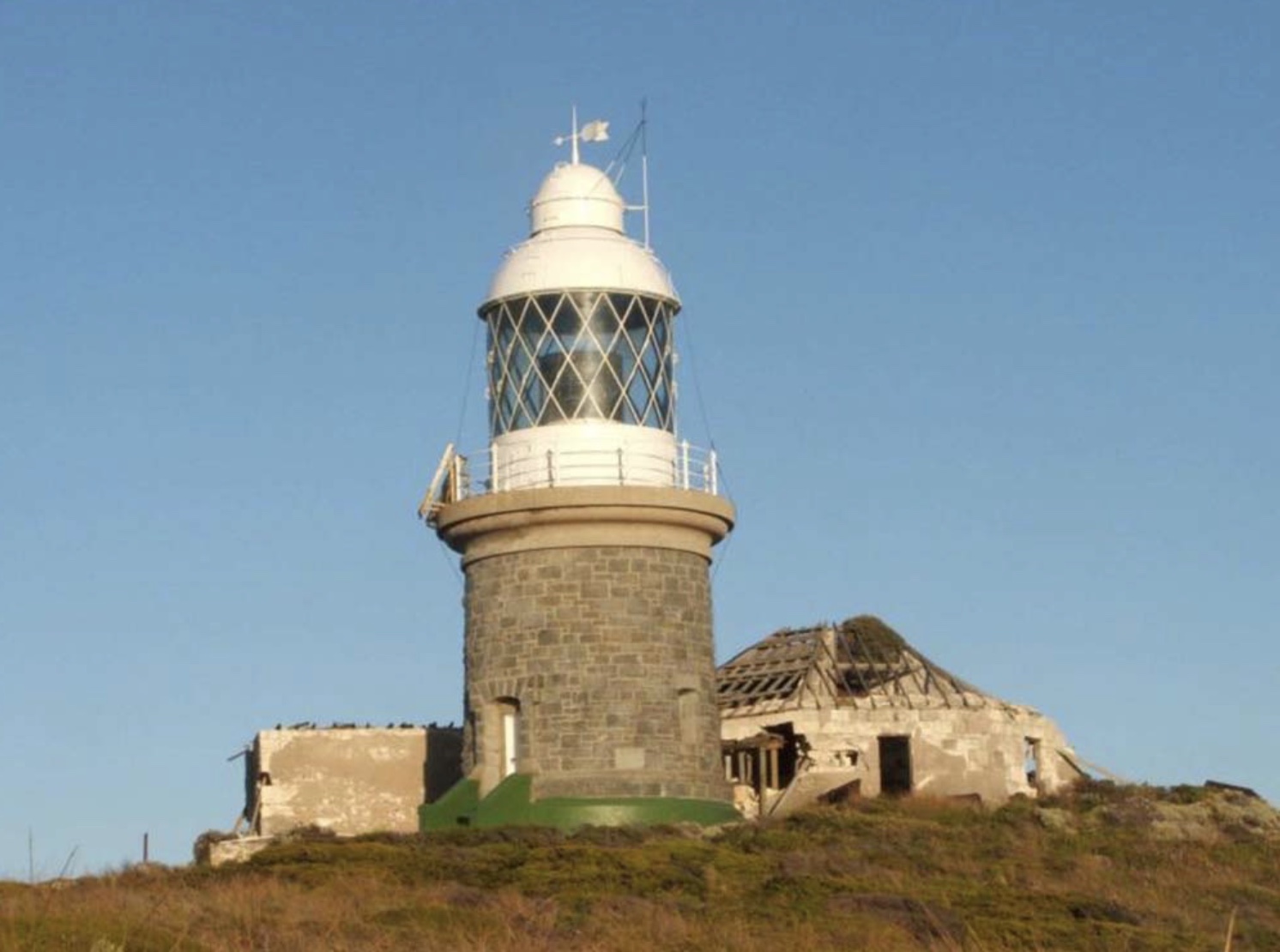
By 1901, the original tower required replacement due to deterioration. The new 7.3-metre cylindrical granite tower, contracted for £2,700, was fitted with a massive Chance Brothers first-order fixed lens housed in a 4.3-metre diameter lantern valued at £3,251 in 1915—among the most expensive lighthouse equipment in the colony. Additional keeper’s quarters were built in 1902 and 1908 to accommodate expanding families. Following Eclipse Island’s lighthouse construction in 1926, Breaksea was automated and keepers withdrawn, ending 68 years of continuous human presence. Recent restoration work has stabilised these historically significant structures, which represent the largest and most complete convict-built lighthouse remains in Western Australia.
141. Eclipse Island Lighthouse
The 1868 loss of the coal-laden barque Northumberland on rocks now bearing her name, after limping around Cape Leeuwin to within sight of Albany, exposed critical navigational gaps. Yet bureaucratic inertia delayed action for nearly six decades until Eclipse Island Lighthouse was constructed in 1926, becoming the first Commonwealth lighthouse built in Western Australia. The 14-metre reinforced concrete tower, located 17 kilometres south of Albany, featured cutting-edge technology: a Chance Brothers first-order dioptric Fresnel lens with eight flash panels and 700mm focal radius, powered by kerosene pressure lanterns producing 140,000 candlepower visible for 25 nautical miles from its focal plane 92 metres above sea level.
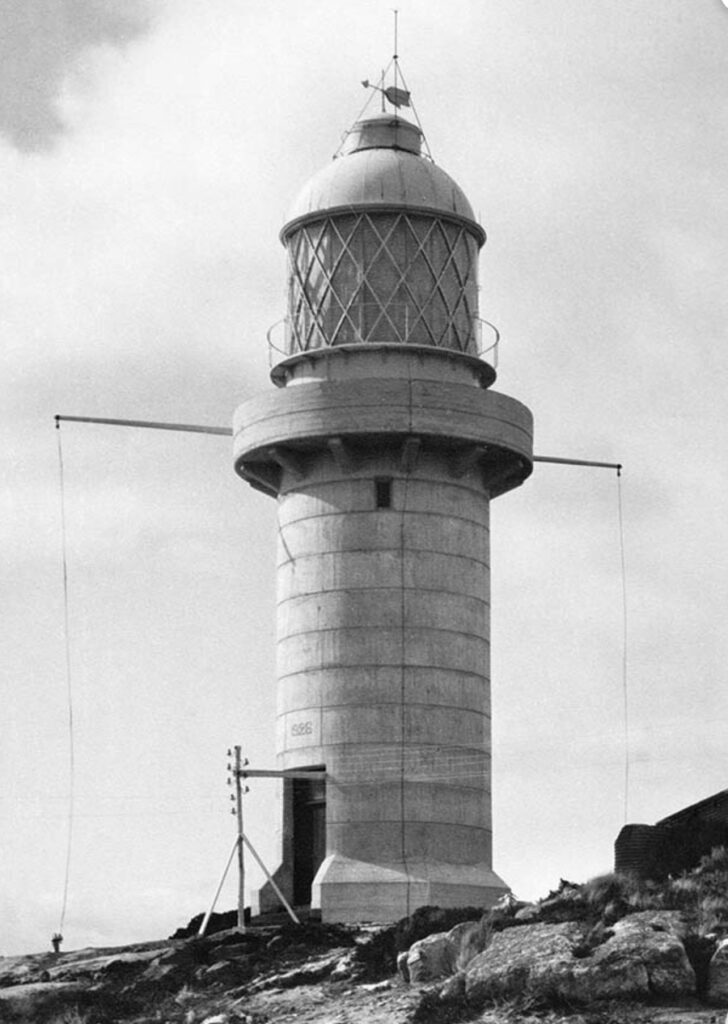
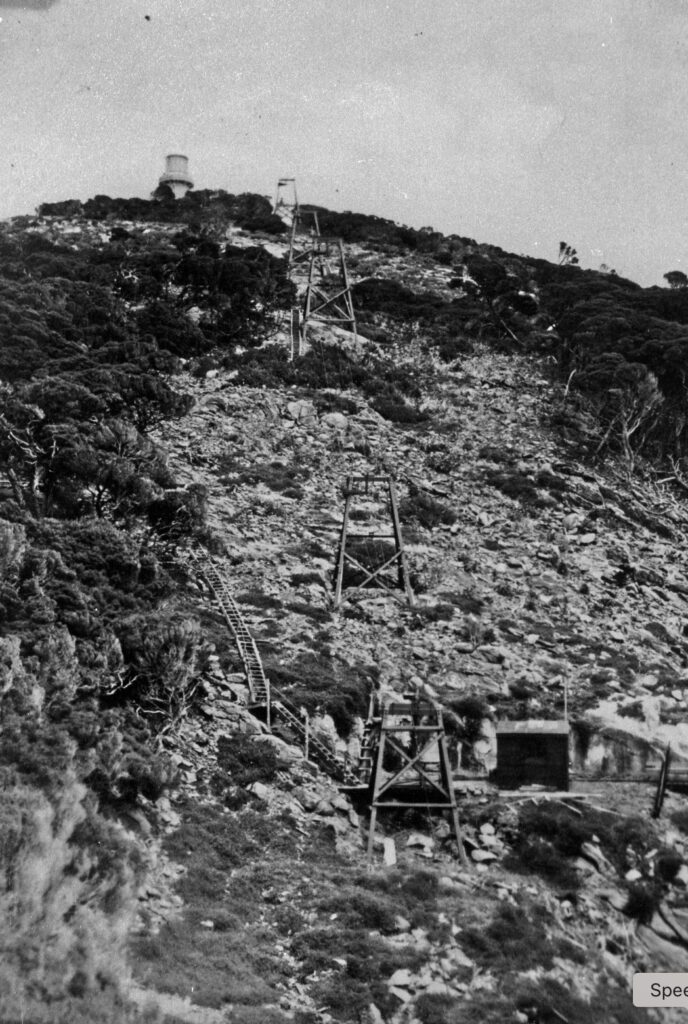
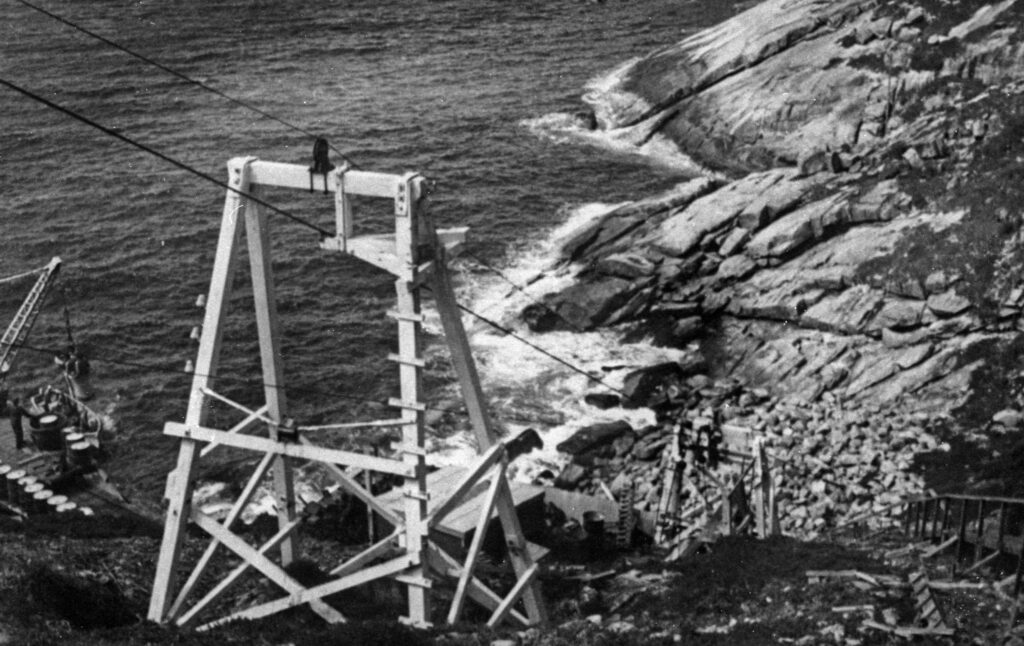


The island’s extreme isolation created unique challenges. With no suitable harbour, a landing was constructed 15 metres above sea level. Supplies and personnel were lifted by derrick from small boats in a wicker basket—lighthouse keepers often stood atop cargo rather than trust the basket itself. Families endured months of isolation, fighting seasickness, rabbits devouring gardens, and relentless wind. Keeper Marion Connelly stored vegetables in sand-filled boxes, watering them daily to maintain freshness. In 1976, a fatal crane accident during resupply operations ended the lighthouse’s manned operation after 50 years. The original Chance Brothers lantern and lens were removed and now form a centrepiece at the Museum of the Great Southern in Albany, while a modern electric beacon continues navigational duties with a characteristic of three white flashes every 15 seconds.
142. Cave Point Lighthouse
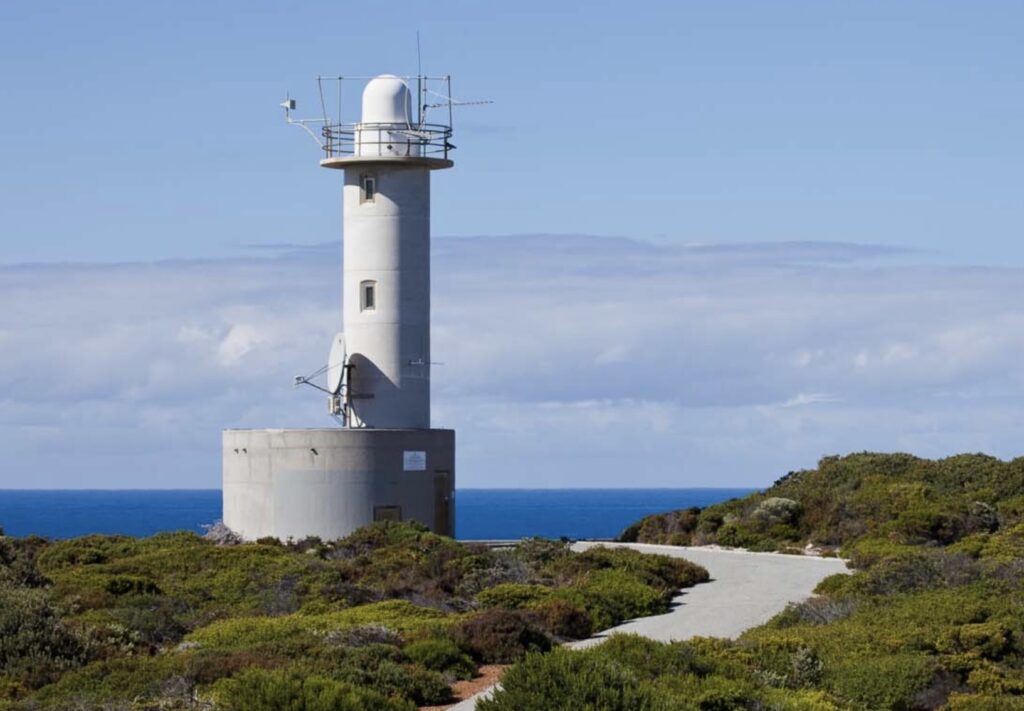
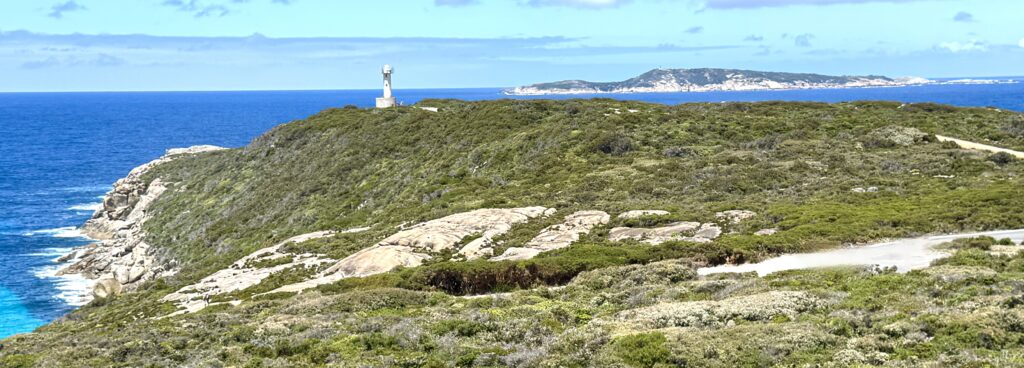
Built in 1976 when Eclipse Island was demanned, Cave Point Lighthouse served as Albany’s third navigational aid. The 12-metre cylindrical concrete tower in Torndirrup National Park operated for only 18 years before being decommissioned in 1994, when it was converted to house a Cospas-Sarsat satellite ground receiver station for the international search and rescue system.
Built in 1976 when Eclipse Island was demanned, Cave Point Lighthouse served as Albany’s third lighthouse. The 12m cylindrical concrete tower in Torndirrup National Park operated for only 18 years before being decommissioned in 1994 when it was converted to house a Cospas-Sarsat satellite ground receiver station for the international search and rescue system, one of only two such installations in Australia. Though no longer an active use as a lighthouse it remains a landmark along the dramatic southern coastline.
Today, Breaksea and Eclipse Islands continue their vital roles in maritime safety with both lighthouses maintained by the Australian Maritime Safety Authority. The trio of structures represents the evolution of lighthouse technology from hand assembled cast iron through massive first order lenses to modern automated systems, their collective history spanning convict labour, imperial investment, Commonwealth innovation, and the tragic human cost of keeping the lights burning in Australia’s most isolated stations.
Technical Details:
Breaksea Island Lighthouse:
Original Tower Height: 13.1 metres (1858, cast iron, octagonal)
Current Tower Height: 7.3 metres (1901, granite, cylindrical)
Focal Plane: 116.7 metres above sea level
Construction: 1857-1858 (original); 1901 (replacement)
Construction Material: Prefabricated cast iron (1858); locally quarried granite (1901)
First Exhibited: 1 January 1858
Original Lens: Second-order catadioptric with oil burners
Current Lens: Chance Brothers first-order fixed lens
Lantern: Chance Brothers 4.3-metre diameter (valued £3,251 in 1915)
Range: 27 nautical miles
Status: Active, automated (1926)
First Keeper: Joseph Nelson (1858, £100 annual salary)
Operator: Australian Maritime Safety Authority (AMSA)
Heritage Listings: State Register of Heritage Places
Eclipse Island Lighthouse:
Tower Height: 14 metres
Construction Material: Reinforced concrete
Focal Plane: 92 metres above sea level
Construction: 1926
First Exhibited: 1926
Lens: Chance Brothers first-order dioptric Fresnel, eight flash panels, 700mm focal radius
Original Light Source: Kerosene pressure lanterns
Original Power: 140,000 candlepower
Current Characteristic: Fl.(3)W. 15s (3 white flashes every 15 seconds)
Range: 25 nautical miles
Status: Active, automated (1976)
Manned Operation: 1926-1976 (50 years)
1976 Conversion: Electric automatic operation
Original Equipment Location: Museum of the Great Southern, Albany
Operator: Australian Maritime Safety Authority (AMSA)
Cave Point Lighthouse:
Tower Height: 12 metres
Construction Material: Reinforced concrete
Construction: 1976
Location: Torndirrup National Park
Operational Period: 1976-1994 (18 years)
Decommissioned: 1994
Current Use: Cospas-Sarsat satellite ground receiver station (search and rescue)
Status: Navigation light inactive; satellite rescue station active
Leave a Reply


