
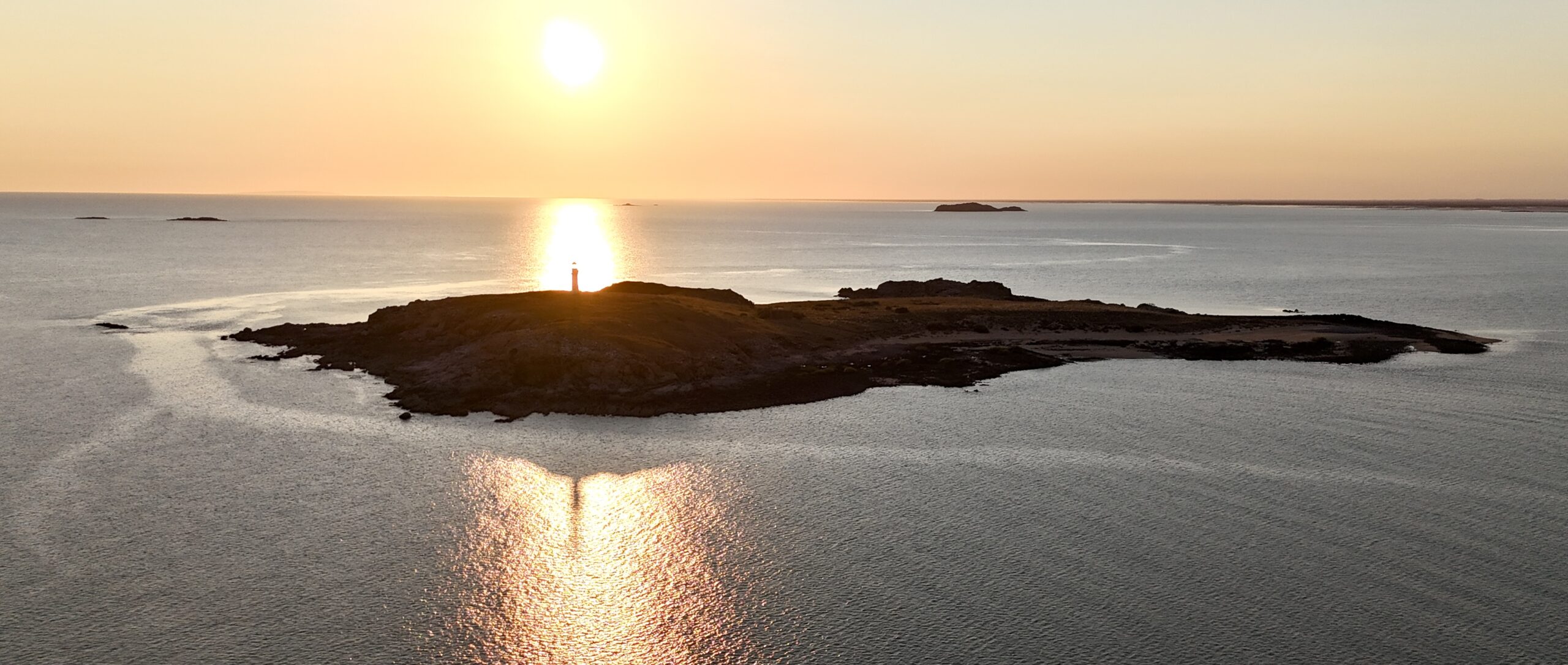

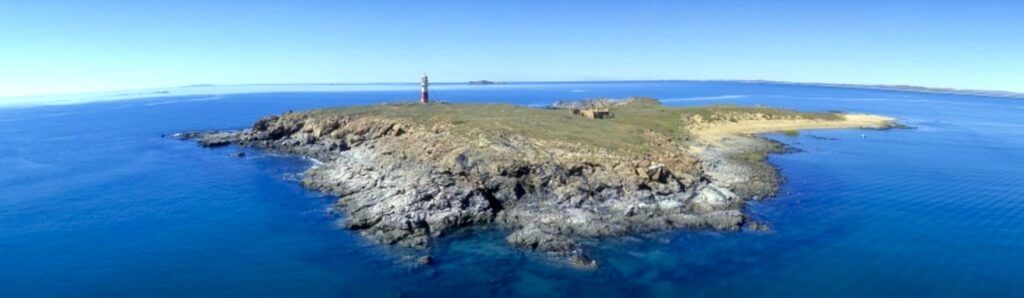
Jarman Island Lighthouse stands on a small island at the mouth of Butcher’s Inlet in the Pilbara region of Western Australia, marking the entrance to the historic Port of Cossack. This distinctive cast iron tower, rising 50 feet above the rocky island, represents a pioneering chapter in Australian lighthouse construction and played a vital role in the development of the northwest region during the late nineteenth and early twentieth centuries.

The island was named in 1863 after Captain Jarman of the barque Tien Tsin, which brought early settlers to the area. Mr Butcher, the ship’s Chief Officer, lent his name to the adjacent inlet. Today, this location sits on the traditional lands of the Ngarluma people, who have inhabited the coastal areas around Roebourne and the West Pilbara for many thousands of years and maintain deep cultural connections to this stretch of coastline known as Bajinhurrba.
By the late 1880s, the Western Australian government recognised the critical need to illuminate the entrance to Cossack which had emerged as the first major port in the northwest and served as the gateway to the region’s booming pastoral and pearling industries. Without navigational aids, the approach through the hazardous waters posed extreme dangers to vessels bringing supplies to remote settlements like Marble Bar and Port Hedland, as well as serving the flourishing pearling fleets.
In 1888, the Public Works Department Resident Engineer of the North West, W.L. Owen, was instructed by the Director of Public Works to call for tenders for the erection of a lighthouse at Cossack. When all six submitted tenders were deemed too expensive, Owen undertook to erect the lighthouse himself, demonstrating the innovative resourcefulness that characterised frontier engineering in the era.
The lighthouse tower represents a remarkable achievement in prefabricated construction technology. The cast iron sections were manufactured in Birmingham, England by the renowned optical firm Chance Brothers at a cost of £1,719 and shipped to Australia as a complete kit including all necessary tools and protective paint. The tower body was composed of cast iron plates a little more than one inch (28mm) thick, flanged and bolted on the inside, presenting a smooth face to the exterior—an ingenious design that prevented salt-laden spray from causing corrosion at the joints.


Construction was supervised by W.L. Owen and Chief Government Architect George Temple Poole, utilising a labour force of prisoners from Roebourne Gaol. These workers included men from Malaysia, the Philippines, China, the Middle East and members of the Cossack pearling fleet who were laid up during the cyclone season. The project was completed in May 1888 and the tower was inaugurated on 14 May 1888.
The distinctive red and white painted tower was topped with a copper-sheeted dome housing a second-order dioptric lantern. The original light source was a flashing white characteristic produced by a four-wick Douglas burner fueled by kerosene or paraffin oil. This sophisticated apparatus required winding every two hours, necessitating the constant presence of lighthouse keepers.

The first lighthouse keeper, Samuel Efford, was appointed on 16 May 1888, with assistant lightkeeper W. White joining on 24 July 1888. The lighthouse was elevated 96 feet above high water level, providing visibility to a distance of 15 nautical miles across the approaches to Cossack.
Following the lighthouse’s completion tenders were called for living quarters for the keepers. The quarters were designed under the supervision of George Temple Poole and the Bunning Brothers’ tender of £595 for construction was accepted on 15 August 1888. The rubble and concrete duplex quarters were typical of buildings erected around Roebourne in that era, utilising pre-cast concrete blocks for corners, doors, and windows. The unique feature of the 1888 dwelling was its curved concrete shell roof, an architectural innovation that unfortunately proved unsuitable for the tropical climate.
Alterations were made to the quarters in 1895-96 when three rooms and a verandah were added, and the entire structure received a new roof and verandah all around, abandoning the original curved concrete design. The infrastructure also included water catchment tanks, garden beds delineated by stone alignments, boatshed footings, and a tramway system for landing supplies.
By 1902 the silting up of the harbour at Cossack meant it could no longer accommodate larger ships which threatening the port’s viability. In 1904 a new jetty was built at Point Samson which gradually replaced Cossack as the principal port for the region. Despite these changes, Jarman Island Lighthouse continued its vital navigational role, now serving the new port facilities.
The march of technology reached Jarman Island in 1910 when the original lamp was replaced with a 55mm incandescent lamp using a vaporized kerosene mantle, changing the light characteristic to occulting. Further modernisation came in 1917 when the lighthouse was converted to automatic operation with an AGA acetylene gas lamp activated by a sun valve, eliminating the need for resident keepers and marking it as one of the early automated lighthouses in Australia.
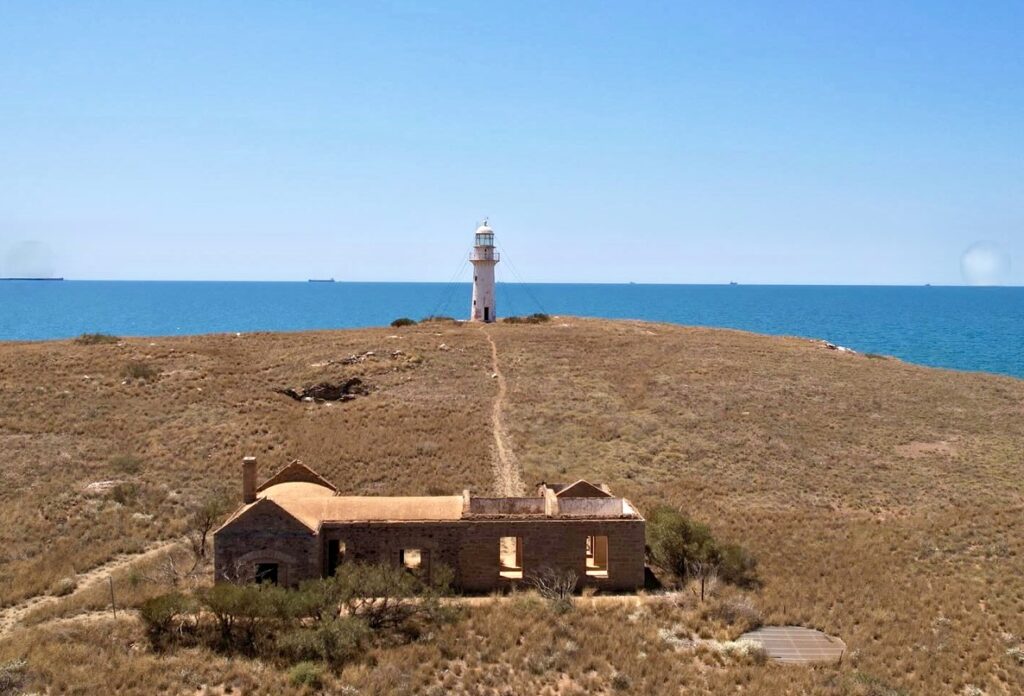
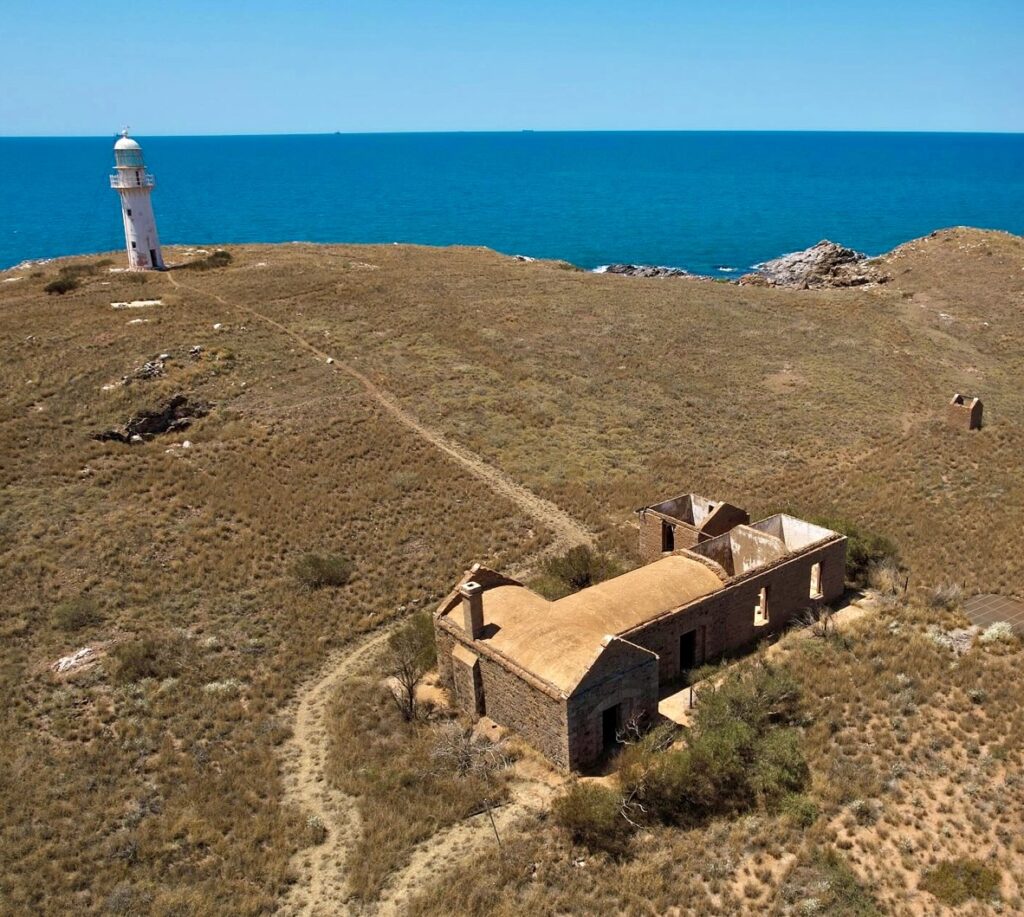
Between 1922 and 1941 the island was leased to J&T Muramatsu, members of the prominent Japanese merchant and pearling family in Cossack, who used the location for holidays. In the 1950s, the quarters and adjacent buildings were stripped of useful materials and abandoned as the region’s maritime focus shifted to new port facilities.
The lighthouse continued guiding vessels through the waters off the Pilbara coast until May 1985, when it was finally extinguished and replaced by the lighthouse at Cape Lambert (Port Walcott), which had been developed to serve the massive overseas iron ore carriers that had become central to the region’s economy in the 1960s. The decommissioning marked the end of nearly a century of continuous service to maritime navigation in the northwest.
Following its closure, the lighthouse and quarters began falling into serious disrepair. The quarters, already roofless and deteriorating faced an uncertain future. However, after several years of campaigning by heritage advocates and local stakeholders the importance of preserving this significant industrial heritage was recognized. In 2003, a grant was awarded to the Shire of Roebourne under the Australian Government’s Regional Tourism Program for the conservation and restoration of the lighthouse.
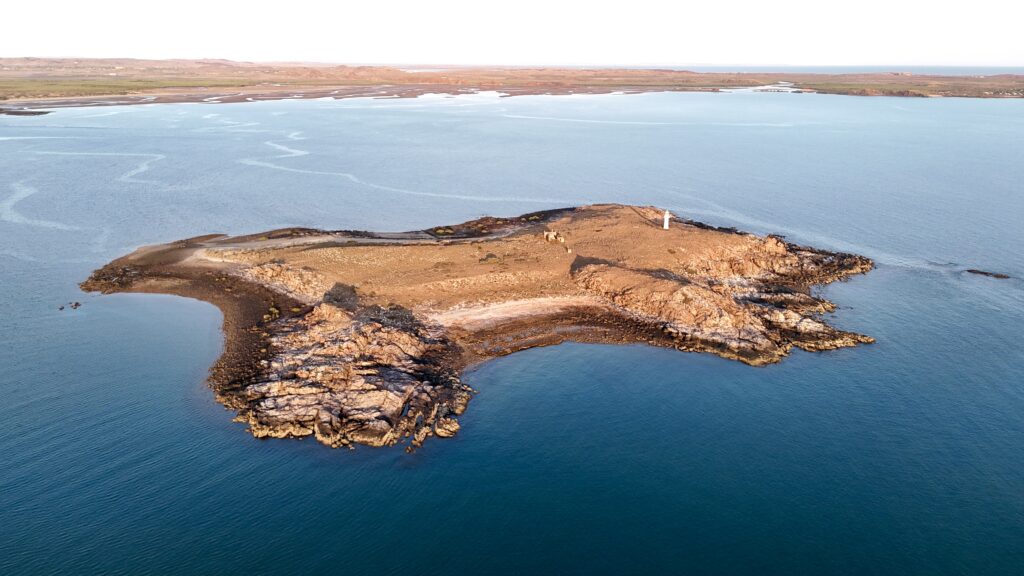
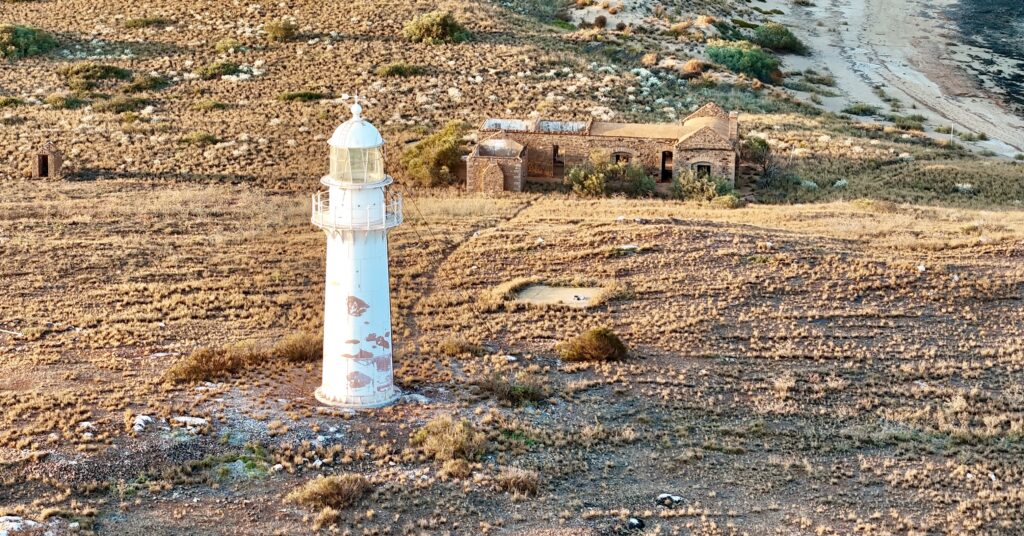
The restoration work, overseen by the Heritage Council of Western Australia with engineering studies funded by Robe River Iron Associates, stabilised the structure and ensured its preservation. The Shire of Roebourne secured a 21 year lease of the island, taking responsibility for its management and conservation.
The heritage significance of Jarman Island Lighthouse was formally recognised through its inclusion in the Register of the National Estate and classification by the National Trust, as well as registration under the Heritage of Western Australia Act 1990. The site is acknowledged as a place of great natural beauty where the lighthouse and ruined quarters harmonise with the natural landscape, serving as a prominent landmark visible from Cossack, Point Samson and Roebourne.
Today, Jarman Island Lighthouse stands as an excellent example of 19th century industrial architecture and engineering ingenuity. It represents the prefabricated cast iron tower technology used throughout Britain and her colonies during the latter part of the nineteenth century and stands alongside Point Moore Lighthouse near Geraldton as one of only two such structures remaining in Western Australia. The site provides evidence of a distinctive way of life no longer practiced in the state and remains closely associated with the pioneering development of the northwest region.
The island’s relatively undisturbed cultural fabric makes it a valuable research site for archaeological, architectural and natural studies. Visitors to nearby Cossack can view the lighthouse from Reader Head Lookout and other vantage points where it continues to serve as an iconic feature of the region’s coastal heritage, standing over waters where it once guided pearling luggers, supply vessels and the ships that helped build the northwest frontier.
Technical Specifications
First Exhibited: 14 May 1888
Status: Inactive (Extinguished May 1985)
Location: Jarman Island, mouth of Butcher’s Inlet, near Cossack, Pilbara, Western Australia
Named After: Captain Jarman of the barque Tien Tsin (1863)
Traditional Owners: Ngarluma people
Construction: 1887-1888
Completion Date: 14 May 1888
Construction Material: Prefabricated cast iron tower (segmented construction)
Manufacturer: Chance Brothers, Birmingham, England
Construction Cost: £1,719
Tower Height: 50 feet (15.24 metres)
Elevation: 96 feet (29.26 metres) above high water level
Tower Design: 1-inch (28mm) thick cast iron plates, flanged and bolted internally
Paint Scheme: Red lower half, white upper half
Structural Support: Five double steel rope ties (guy wires)
Dome: Copper sheeting
Supply Infrastructure: Tramway system for landing supplies
Construction Labour: Prisoners from Roebourne Gaol (including workers from Malaysia, Philippines, China, Arabian countries, and members of Cossack pearling fleet)
Project Supervision: W.L. Owen (PWD Resident Engineer, North West) and George Temple Poole (Chief Government Architect)
Keeper Accommodation
- Original quarters: Duplex rubble and concrete construction (1888-1889)
- Construction Cost: £595 (Bunning Brothers tender, accepted 15 August 1888)
- Design: Supervised by George Temple Poole
- Original Roof: Curved concrete shell (unique feature, later replaced)
- 1895-96 Additions: Three rooms and verandah; complete re-roofing and all-around verandah
- Current Status: Derelict and roofless
Light Apparatus
Original Light Source (1888-1910): Four-wick Douglas burner (kerosene/paraffin oil)
Original Lens: Second-order dioptric lantern (Chance Brothers)
Original Characteristic: Flashing white
Winding Requirement: Every two hours (required two keepers)
1910 Conversion:
- 55mm incandescent lamp with vaporized kerosene mantle
- New Characteristic: Occulting
1917 Automation:
- AGA acetylene gas lamp with sun valve
- First automated operation
Visibility: 15 nautical miles (nominal range)
Staffing
First Keeper: Samuel Efford (appointed 16 May 1888)
Assistant Keeper: W. White (appointed 24 July 1888)
Keepers Required: Two (until automation in 1917)
Notable: Francis T. Langer, arrested and interned during World War I
Current Status
Operator: Inactive (decommissioned May 1985)
Replaced By: Cape Lambert Lighthouse
Land Management: Shire of Roebourne (21-year lease)
Heritage Status:
- Register of the National Estate
- National Trust Classification
- Heritage of Western Australia Act 1990
Historical Features
- Only one of two prefabricated cast iron lighthouses in Western Australia (with Point Moore)
- Representative of innovative prefabricated construction technology of the 1880s
- Earliest lighthouse in the Pilbara region
- Served Port of Cossack (1888-1902) and Point Samson (1904-1985)
- Automated in 1917 (early example in Australia)
- Island leased to Muramatsu family (1922-1941)
- Restored 2003 under Australian Government’s Regional Tourism Program
Site Features
- Cast iron spiral staircase to lantern
- Water catchment tanks
- Stone alignments marking garden beds and paths
- Boatshed footings
- Tramway system
- Asbestos mine shaft
- Stone cairns
- Archaeological material
- Helipad
- Lightning earthing cable
- Ruined keepers’ quarters
Access
Viewing: Visible from Reader Head Lookout, Cossack, Point Samson, and Roebourne
Island Access: Restricted; Shire of Roebourne lease
Tower: Not open to public
Best Views: Reader Head Lookout, Cossack
Leave a Reply


